
Six weeks in Fukuoka taught me more about business development than any automation ever could. Tom and I sat down to unpack what really happened when a recovery trip turned into a masterclass in showing up.
I went to Japan to recover from a bike injury and tinker with AI products. I stayed six weeks. That wasn’t the plan.
The plan was rest, some remote work, maybe a bit of coding. What actually happened was two conference fortnights, a pitch competition, 90 minutes of Q&A after a presentation I thought would run 20 minutes, and a partnership that’s reshaped how I think about client work. Tom Southerton—my old school friend, now running Adaptable International and building Awe Realm Studios on Noko Island—invited me to stay, work together, and figure things out. I said yes. That decision, more than any workflow automation or AI demo, is what moved both our businesses forward.
We recorded this as the first video podcast of Series 3, and it’s the counterbalance to Episode 24’s deep dive into NHK’s AI breakthrough. That episode showed what AI can do for broadcasting. This one shows what it can’t do—and why human presence, authenticity, and showing up still matter more than any algorithm.
The Conference Circuit: Where the Real Work Happened
Co-Live Fukuoka and Ramen Tech weren’t on my radar when I landed. Tom convinced me to extend, and suddenly I was presenting at Engineer Cafe on AI scheduling for broadcasters. Twenty minutes stretched to 90 as questions kept coming. People wanted to know how this stuff actually works—not the pitch deck version, the messy reality of integrating AI into legacy broadcast workflows.
At Ramen Tech, we ran a booth demonstrating AI voice bots in Hindi, Chinese, Italian, Spanish—live, in conversation, no scripting. Faces lit up. A queue formed. We built a custom ramen bowl generator as a tongue-in-cheek email marketing tool, and people loved it because it had personality. Then came the pitch competition: five minutes on AI services, no slides, just talk. I made it through. But here’s the thing—every meaningful opportunity that followed came from human connection, not from the pitch.
The lunch in Fukuoka that turned into partnerships. Meeting competitors at barbecues and realising we could collaborate. The digital nomads and remote workers who wanted to talk shop, not because they’d seen a demo, but because we’d sat down together. That’s what actually works.

Awe Realm Studios: The Single Point of Failure
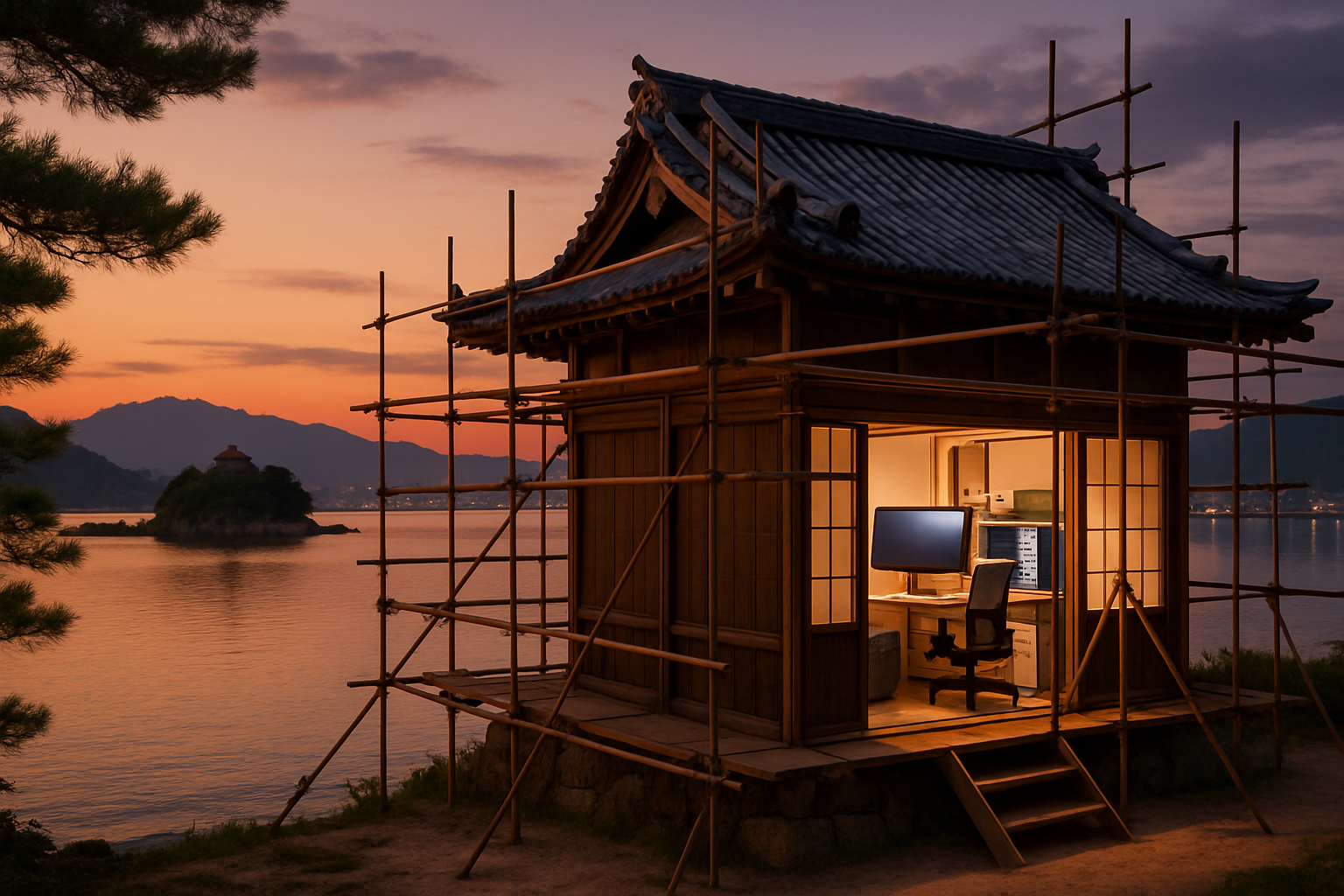
Tom’s project is ambitious. He’s renovating a building on Noko Island in Fukuoka Bay—physical construction, DIY work, the kind of thing that eats time and reveals bottlenecks fast. My consulting work with him wasn’t about AI for AI’s sake. It was about identifying the single point of failure and finding 20 hours a week through smart automation.
We separated the spring launch (day events, manageable scope) from the residential programmes (following year, bigger infrastructure needs). We mapped out eight deliverables covering strategy, workflow, priorities. The real win? Clarifying what Tom needed to do himself and what could be handed off—to AI, to collaborators, to systems that don’t require his constant input.
This is where AI shines in broadcast and creative industries. Not replacing human judgement, but freeing up the humans to make better decisions. Tom’s building something that blends Western and Japanese accommodation styles for remote workers. That vision needs his attention. The email workflows, the content scheduling, the media production grunt work—those can be automated. Vibe coding, N8N workflows, custom image generation—I’m doing development now I’ve never been able to do before, and it’s because the tools have caught up with the ambition.
But none of that happens if Tom doesn’t invite me to stay. None of it happens if we don’t sit down, talk through the mess, and figure out what actually matters. The tools are powerful. The relationship is what makes them useful.
The Real Lesson: Slowing Down Beats Rushing Around
Tom said watching me just take action and get things done was refreshing. I said the same back to him—seeing someone commit to a physical build, navigate setbacks, and keep moving forward is rare. We both slowed down to focus instead of rushing around sightseeing or chasing the next shiny opportunity. That discipline, that decision to go deep rather than broad, is what made the six weeks productive.
Broadcast media isn’t dead. It’s adapting, and I’m adapting with it. The AI voice bots handling 100+ languages, the scheduling tools, the workflow automation—those are part of the palette now. But they’re tools, not the story. The story is still human connection, authenticity, and showing up when it matters.
Q4’s ramping up. I’m back in the UK, new client consultancy work, London networking, speaking engagements. Tom’s prepping for the spring opening at Awe Realm, regular gigs, recording projects, finding collaborators. We’re both building on connections made during the conference fortnight. Not because we had the best pitch deck or the slickest demo, but because we were there, present, willing to engage.
That’s the lesson. AI can automate the grunt work. It can’t automate trust. And in an industry built on tight deadlines, creative collaboration, and high-stakes decisions, trust is still the currency that matters most.
If you’re working in broadcast, media production, or any creative field where AI’s creeping in fast—don’t lose sight of that. The tools are incredible. The relationships are irreplaceable. And sometimes, the best business decision is just saying yes when someone invites you to stay a bit longer and figure things out together.
Curious what an AI voice agent sounds like in practice? Try Ancast Voice: ring our demo hotel or talk to it in your browser.
Ancast Intelligence — AI in broadcast consulting by Ben Anchor.