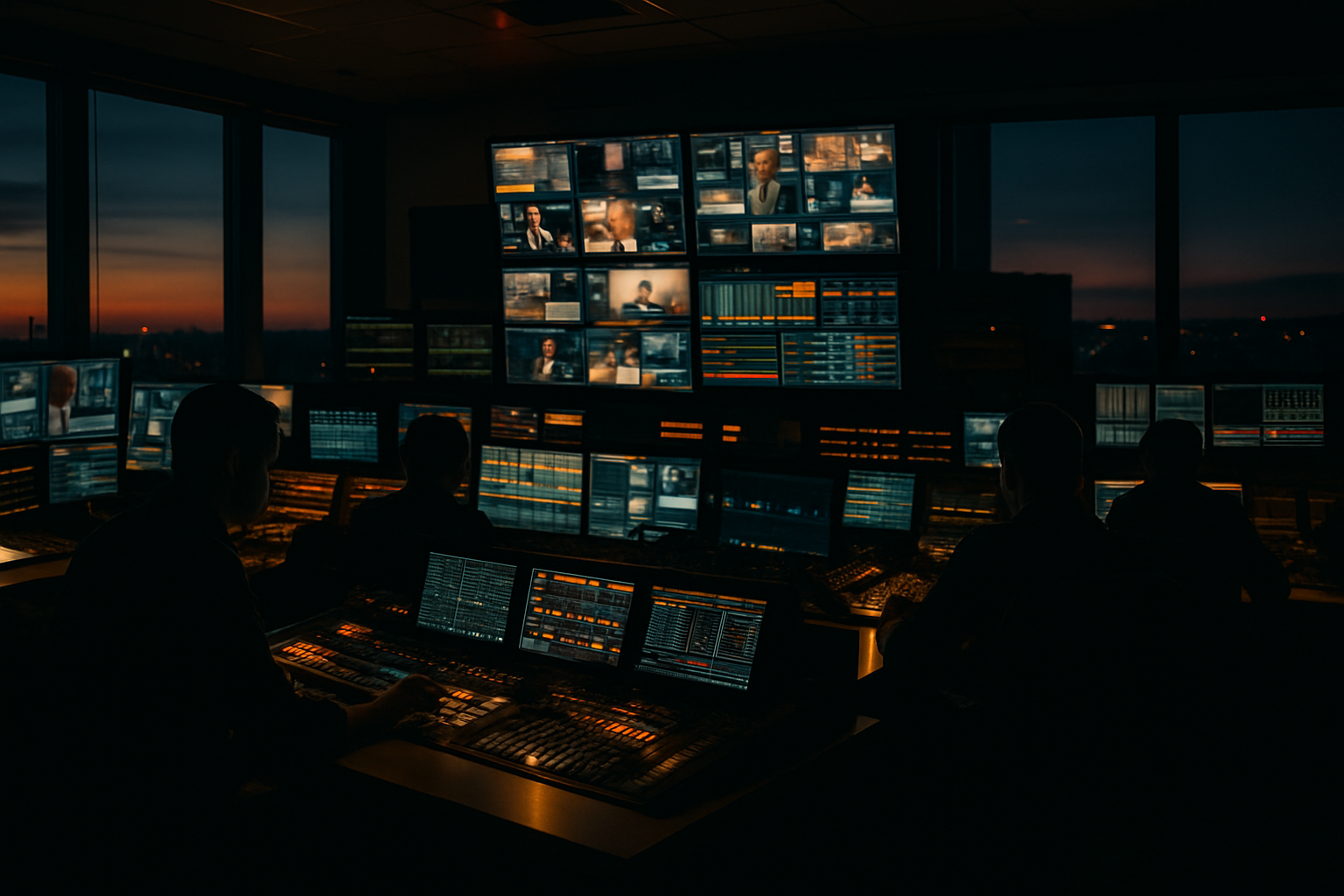
ChAIse & AIva walked me through one of the gnarliest delivery challenges in modern broadcast. Turns out the real battle isn’t code — it’s making humans cooperate at scale.
I’ve been mulling over something ChAIse and AIva said in this week’s bonus episode, and it’s stuck with me like a splinter: the hardest part was never the technology.
They unpacked the full arc of launching a brand new Smart TV app on a brand new national streaming platform — from the first planning workshop to millions of viewers hitting play for the first time. And the central thesis was this: the most complex delivery challenges of the digital age aren’t solved by the smartest engineers in a room. They’re solved by governance, discipline, alignment, and something the team called “operational empathy.”
Let me sit with that for a moment, because it cuts against every instinct we’ve been trained to have in this industry.
The Train Analogy That Stopped Me Cold
ChAIse framed the challenge like this: imagine you’re tasked with building a brand new ultra-modern transit system for a major city. But you have to perfectly connect several legacy train lines built decades apart, using completely different gauges of track — and you cannot stop the trains. Not for a single minute. Every commuter still needs to reach their destination on time, every day, throughout the entire construction.
That’s what delivering a unified national streaming platform actually feels like from the inside.
I’ve lived through enough of these projects to know the analogy isn’t melodrama — it’s restraint. The invisible complexity of stitching together multiple legacy systems, each with its own quirks, dependencies, and political constituencies, while keeping the service live and flawless for millions of viewers, is genuinely staggering. And yet the instinct of most organisations when faced with that challenge is to throw engineers at it first.
ChAIse and AIva were blunt: that’s a guaranteed recipe for expensive, public failure.
Why Months of Workshops Felt Like Wasted Time (Until They Didn’t)
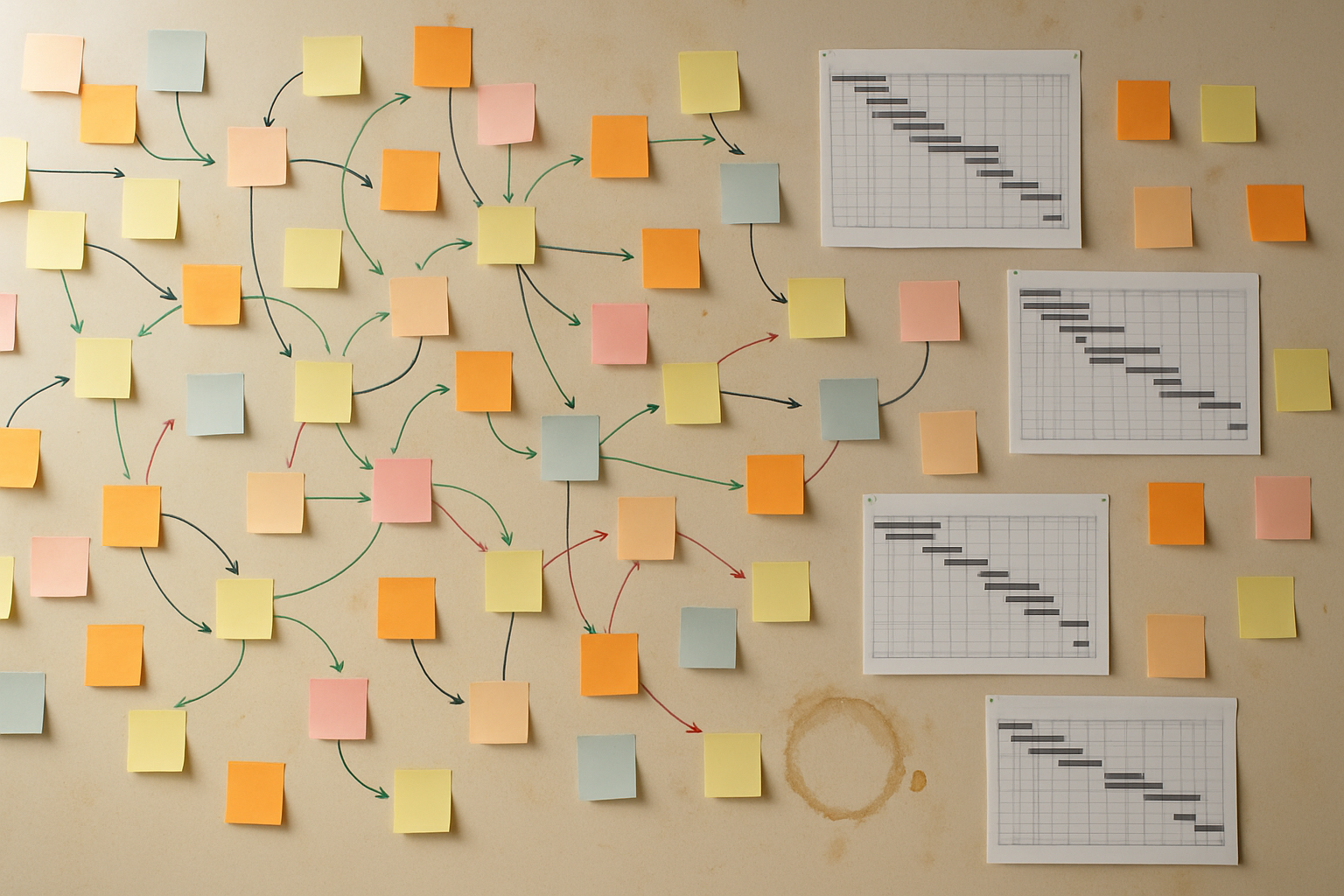
The delivery they dissected began with months of workshops and cross-party alignment sessions — before a single line of code was written. And I’ll confess, my instinct is always to bristle at that. Months? How many? Who’s paying for all those hotel biscuits and flip charts? When do we actually start building?
But here’s the uncomfortable truth they surfaced: those workshops became the true foundation of the platform. Because what they were really doing wasn’t drawing architecture diagrams. They were building a Target Operating Model — a shared blueprint for how multiple organisations would work together, who owned what, and how decisions would get made when things inevitably went sideways.
Without that, every incident becomes a blame game between organisations. With it, you have a fighting chance of operational empathy — the ability to see the same data, speak the same language, and resolve problems together as one unified team.
AIva called it “invisible but critical work,” and I think that’s exactly right. It’s the kind of foundational effort that gets cut in the first budget review because it doesn’t look like progress. But its absence guarantees chaos later.
The Code Freeze That Everyone Embraced
One of the boldest decisions the team made was to execute a platform-wide code freeze ahead of a major national live event. And here’s the bit that floored me: the entire team embraced it rather than resented it.
If you’ve ever worked in a fast-moving engineering culture, you’ll know that code freezes are usually met with groans, workarounds, and passive-aggressive Slack threads. But on this project, because the Target Operating Model was already in place, because the dependency mapping had been done upfront, because everyone understood the stakes and the choreography, the freeze was seen as the sensible, disciplined thing to do.
That’s not technology. That’s culture. And culture, as we all know, eats strategy for breakfast.
The Launch Day Illusion
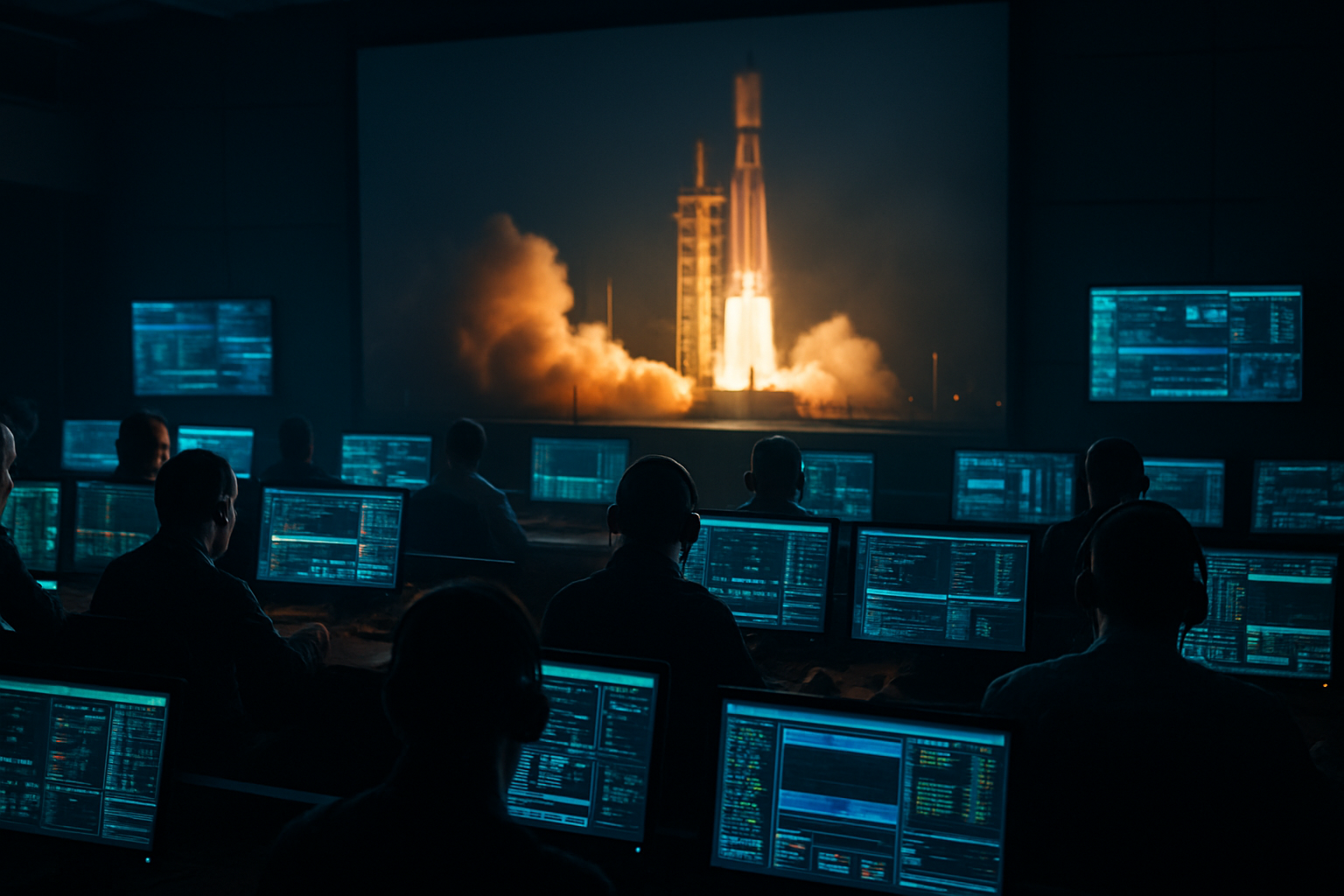
ChAIse and AIva were careful to stress that launch day is just the beginning. The real test of the platform came after the cameras stopped rolling, when the cross-party incident management system had to prove itself in the wild. Gating routines, staged environment releases, pre-flight checks, a promote-to-live tech plan that left nothing to chance — all of it designed to keep the platform running flawlessly long after the fanfare faded.
And here’s where I think we, as an industry, have a tendency to lie to ourselves. We lionise the launch. We throw the party. We cut the ribbon. But the brutal, unglamorous work of keeping it running — that’s where platforms either live or die. And it requires a level of operational discipline that most organisations simply don’t have the patience to sustain.
The Question That Lingers
They left us with a provocative thought: as flawless, unified, multi-provider streaming becomes the absolute baseline — as viewers demand perfection every single time they hit play — will the walls between the world’s major streaming platforms eventually have to come down? Will they all be forced to adopt this same blueprint of shared infrastructure and operational empathy just to keep us watching?
I don’t have an answer to that. But I do think we’re heading towards a world where the differentiator between streaming platforms won’t be the content library or the recommendation algorithm. It’ll be the invisible operational excellence that makes it feel effortless.
And if that’s true, then the work ChAIse and AIva described — the workshops, the Target Operating Model, the dependency mapping, the operational empathy — isn’t a nice-to-have. It’s the entire game.
So here’s my landing: the hardest part of launching a national streaming platform wasn’t the technology. It was making humans cooperate at scale, under pressure, with millions of viewers watching. And the only way to do that is to build the culture, the governance, and the operational empathy first — before the engineers even open their laptops.
Sounds slow. Sounds expensive. But it’s the only thing that actually works.
Ancast Intelligence — AI in broadcast consulting by Ben Anchor.