
We’ve spent years talking about AI in broadcast as if the technology is the problem. Teju Mulagada’s work on SMPTE ST 2110 automation proves otherwise — it’s the governance, the adoption, and the change management that kill us.
I’ve lost count of how many times I’ve sat in a conference room watching a broadcast engineer’s eyes glaze over during an “AI transformation” pitch. Not because they don’t understand the tech — they built half the infrastructure in the building — but because the pitch is always the same: vague promises, monolithic platforms, no acknowledgement of how actual live production works.
That’s why my conversation with Teju Mulagada felt different. Her research on multi-agent AI systems for SMPTE ST 2110 workflows, presented at SMPTE 2025 and now heading for publication in the Motion Imaging Journal, isn’t another hype cycle. It’s the first piece of work I’ve seen that treats broadcast automation as a governance problem first, and a technology problem second.
The Three-Agent Architecture That Actually Makes Sense
Teju’s approach splits the orchestration workload into three specialised agents: one tracking metadata anomalies in real-time, one predicting buffer management spikes before they cascade, and one monitoring device configuration interactions at scale. Each agent does one thing well. Each agent can be audited, governed, and validated independently.
This matters because live broadcast is not a single workflow. It’s dozens of interlocking systems, any one of which can fail catastrophically if someone misconfigures a device or a metadata field drifts out of sync. The traditional response has been reactive firefighting — engineers scrambling to diagnose buffer overflows or configuration chaos after they’ve already caused a black screen.
What struck me most about Teju’s work is that it doesn’t try to replace that human expertise. It augments it. The metadata tracking agent flags anomalies, but doesn’t auto-correct them. The buffer management agent predicts spikes, but doesn’t silently rebalance loads. The configuration agent monitors device interactions, but alerts a human before making changes. Every critical decision is validated, never automated away.
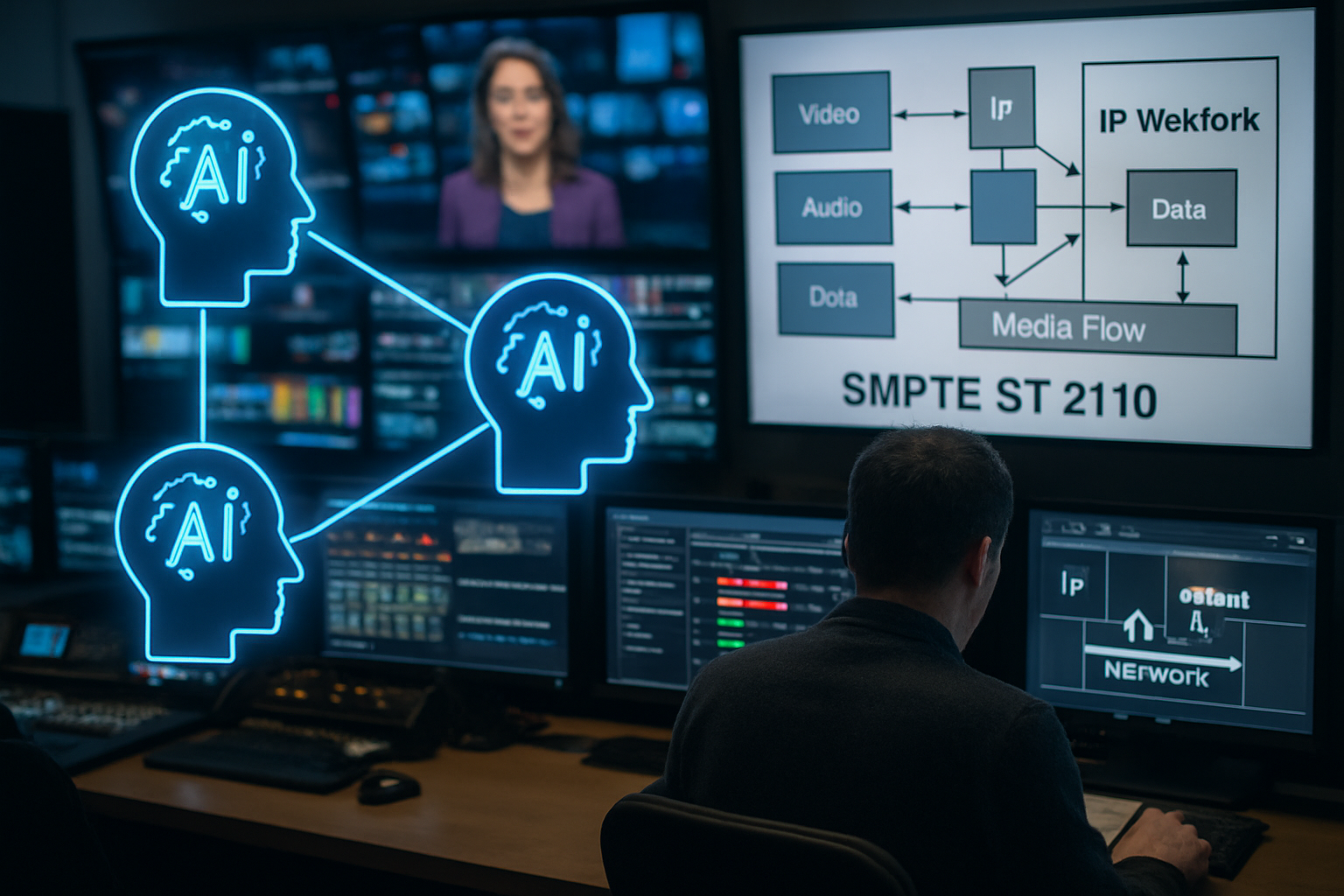
That’s the bit I want to push back on, actually — not Teju’s implementation, but the broader industry conversation. We keep framing “human-in-the-loop” as a compromise, a transitional phase before full automation. I don’t think that’s right. I think human-in-the-loop is the end state for live broadcast, because the cost of getting it wrong is too high and the edge cases are too weird. The goal isn’t to remove humans from the loop. The goal is to give them better information, faster, so they can make decisions that matter instead of drowning in noise.
The Real Bottleneck Isn’t AI — It’s SMPTE ST 2110 Adoption
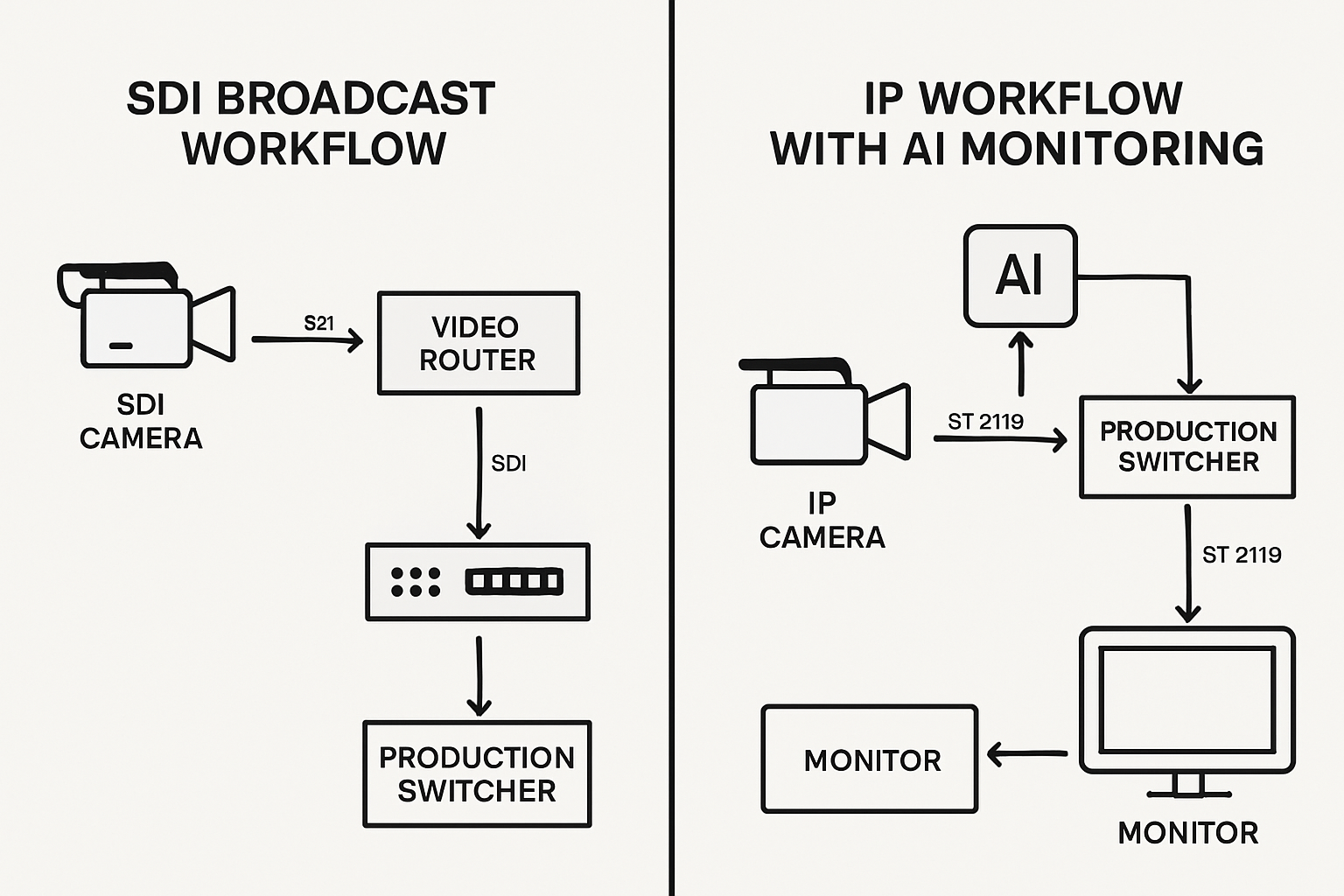
Here’s the uncomfortable truth Teju surfaced: you can’t layer AI orchestration on top of infrastructure that’s still running SDI. Multi-agent systems rely on the IP-native, software-defined, metadata-rich workflows that SMPTE ST 2110 enables. If your facility hasn’t made that transition, you’re not ready for this conversation yet.
And that’s the bottleneck. Not the AI technology. Not the lack of vendor solutions. The knowledge gap. How many broadcast engineers have deep hands-on experience with ST 2110 workflows? How many facilities have completed the transition beyond pilot projects? How many media companies have the internal training programmes to bring their teams up to speed?
This is where I think the industry is lying to itself. We keep talking about AI transformation timelines as if the constraint is model training or cloud infrastructure. It’s not. The constraint is that most broadcast teams don’t yet have the foundational IP workflow expertise to even frame the right questions. Teju’s work assumes you’ve already got ST 2110 running in production. That’s not a small assumption.
But here’s the optimistic take: when you do get the governance right, deployment timelines are months, not years. Teju’s experience suggests that once the foundational infrastructure is in place, once the team understands the workflows, once the human-in-the-loop approval gates are designed, the AI layer can be stood up quickly. That’s a massive shift from the traditional broadcast tech refresh cycle, which measures timelines in fiscal quarters and capital approval boards.
What This Means for the Next Wave of Broadcast Builds
I think we’re at an inflection point. The facilities being designed today will either embrace this orchestrated, multi-agent approach — edge computing, IP workflows, cloud orchestration, AI governance built in from day one — or they’ll build another generation of infrastructure that can’t take advantage of it.
The risk isn’t that AI won’t work in broadcast. Teju’s research proves it works. The risk is that we’ll under-invest in the change management, the training, the governance frameworks that make it safe to deploy. The risk is that we’ll treat this as a technology upgrade instead of an operational transformation.
Because here’s what I keep coming back to: broadcast isn’t failing because AI technology doesn’t work. Broadcast is failing because adoption, governance, and change management are hard. This conversation with Teju is about how to actually implement the future — not the version sold in vendor slide decks, but the version that ships on time, stays on air, and doesn’t require a PhD to operate.
That’s the honest conversation. That’s the one worth having.
Ancast Intelligence — AI in broadcast consulting by Ben Anchor.