
Why I’m Done Chasing Agent Autonomy (and What I’m Building Instead)

Full autonomy was always the wrong target for broadcast AI. After months wrestling with orchestration versus automation, I’ve landed somewhere more pragmatic—and frankly, more exciting.
I’ve spent the past six months watching the AI agent conversation bifurcate in real time. On one side, vendor pitches promising fully autonomous workflows that’ll run your operation while you sleep. On the other, a quieter movement building orchestrated systems where AI does the heavy lifting and humans stay firmly in the decision loop. I’m now firmly in the second camp, and the latest podcast episode with RaIAna crystallised exactly why.
The autonomy narrative was always seductive. Who wouldn’t want systems that just… work? But scratch the surface and you find brittle integrations, unpredictable failure modes, and a fundamental mismatch with how broadcast actually operates. We’re a reliability-first industry. Autonomy optimises for different things.
The Infrastructure Layer Nobody’s Talking About
What struck me hardest in this conversation was the realisation that broadcast operators are sitting on competitive advantages they don’t even recognise. While tech startups scramble to build audience analytics and metadata pipelines from scratch, we’ve got BARB ratings, mature CDN infrastructure, and real-time viewership data as standard kit. That’s not table stakes—that’s an 18-month head start.
The Model Context Protocol (MCP) and Agent-to-Agent (A2A) standards are the unlock here. MCP standardises how agents access tools and context; A2A lets independent agents coordinate without custom middleware. Suddenly, you’re not writing bespoke integrations between every system. You’re composing workflows from standardised components. The SMPTE ER 1011:2025 spec formalises this for broadcast, which means early movers in Q1 2026 aren’t just experimenting—they’re building on emerging standards.
I’ll be blunt: if you’re still hand-rolling integrations between your playout, metadata, and analytics systems, you’re about to get lapped. Standards adoption is the difference between a proof of concept that takes three months versus nine.
Sports Production Proves the Point
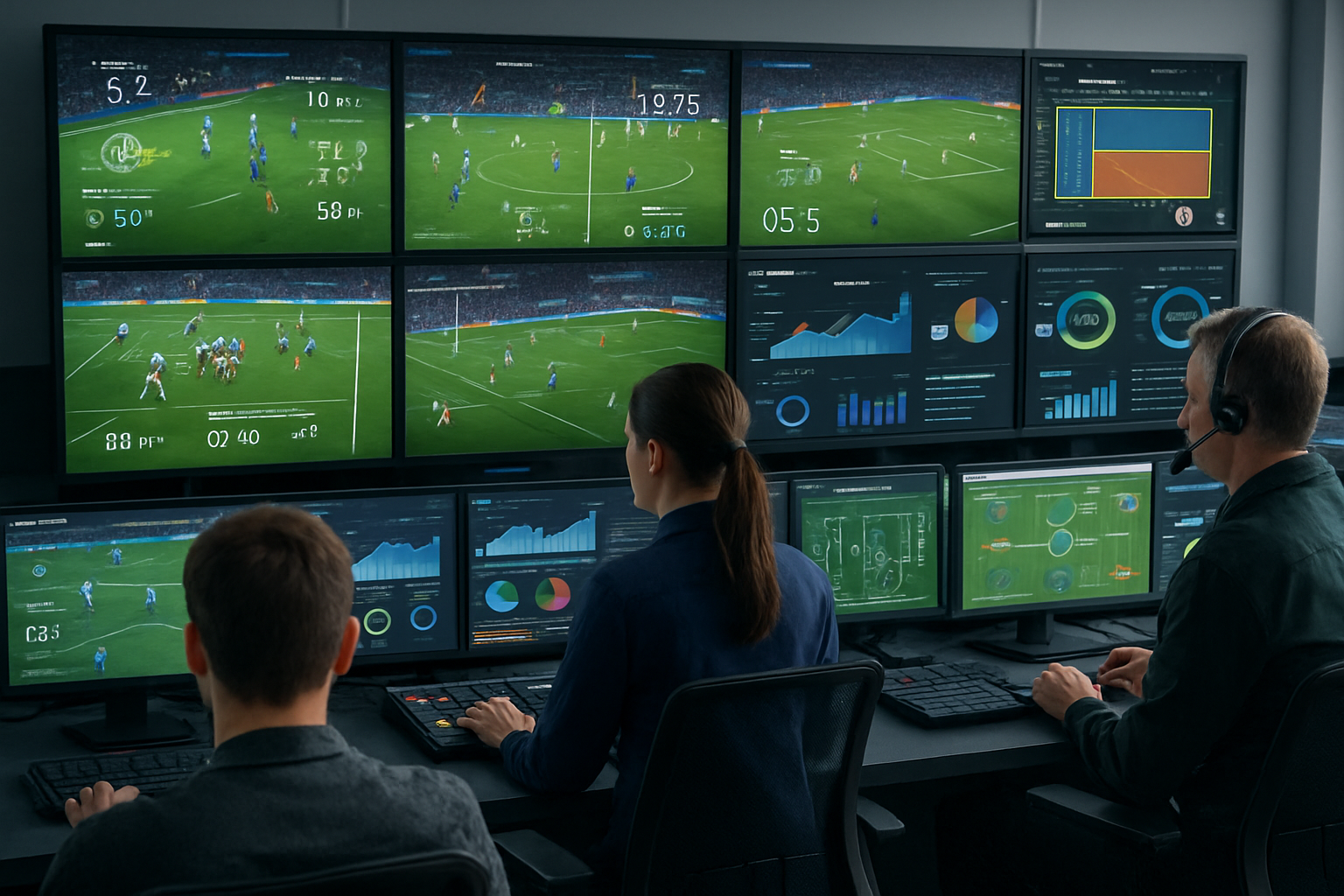
The sports production example RaIAana and I unpacked is the clearest real-world demonstration of orchestration in action. Live match feed → autonomous camera tracking → AI-driven highlight detection → real-time encoding → metadata tagging → live statistics generation → multi-platform distribution. Every stage involves AI doing compute-intensive work, but human operators retain oversight at decision points.
This isn’t theoretical. It’s happening now, and it works because the system is designed around coordination under supervision, not end-to-end autonomy. When the AI misidentifies a highlight, a human catches it before it hits distribution. When encoding parameters need tweaking for network conditions, the AI suggests; the operator approves. The loop stays closed.
What I love about this model is that it scales with your confidence. Early days? Tight human approval gates. Six months in with proven performance? Loosen the reins on low-stakes decisions. You’re de-risking incrementally, not betting the operation on a black box.
System 2 Thinking and When to Spend the Tokens
One thread from the episode I’m still chewing on: the idea of System 2 reasoning as an expensive, allocable resource. Fast, intuitive AI inference is cheap and getting cheaper. Deep reasoning—the kind that involves multi-step analysis, hypothesis testing, and nuanced judgement—costs real compute. The strategic question is where you spend it.
In broadcast, I think the answer is clear: allocate expensive reasoning to decisions with asymmetric impact. Audience segmentation for a major launch? Worth it. Real-time encoding optimisation for the thousandth simulcast? Probably not. The mistake I see teams making is either over-indexing on cheap inference (missing opportunities for genuine insight) or burning budget on deep reasoning for low-stakes repetitive tasks.
The nowcasting work we’ve been doing at Ancast Intelligence leans heavily on this distinction. Predicting audience behaviour in the next 15 minutes doesn’t need o1-level reasoning for every data point. But when we’re testing a new hypothesis about viewer churn triggers, we throw the expensive models at it and let them cook. It’s about matching tool to task, not one-size-fits-all.
Ethics as Engineering, Not Compliance Theatre
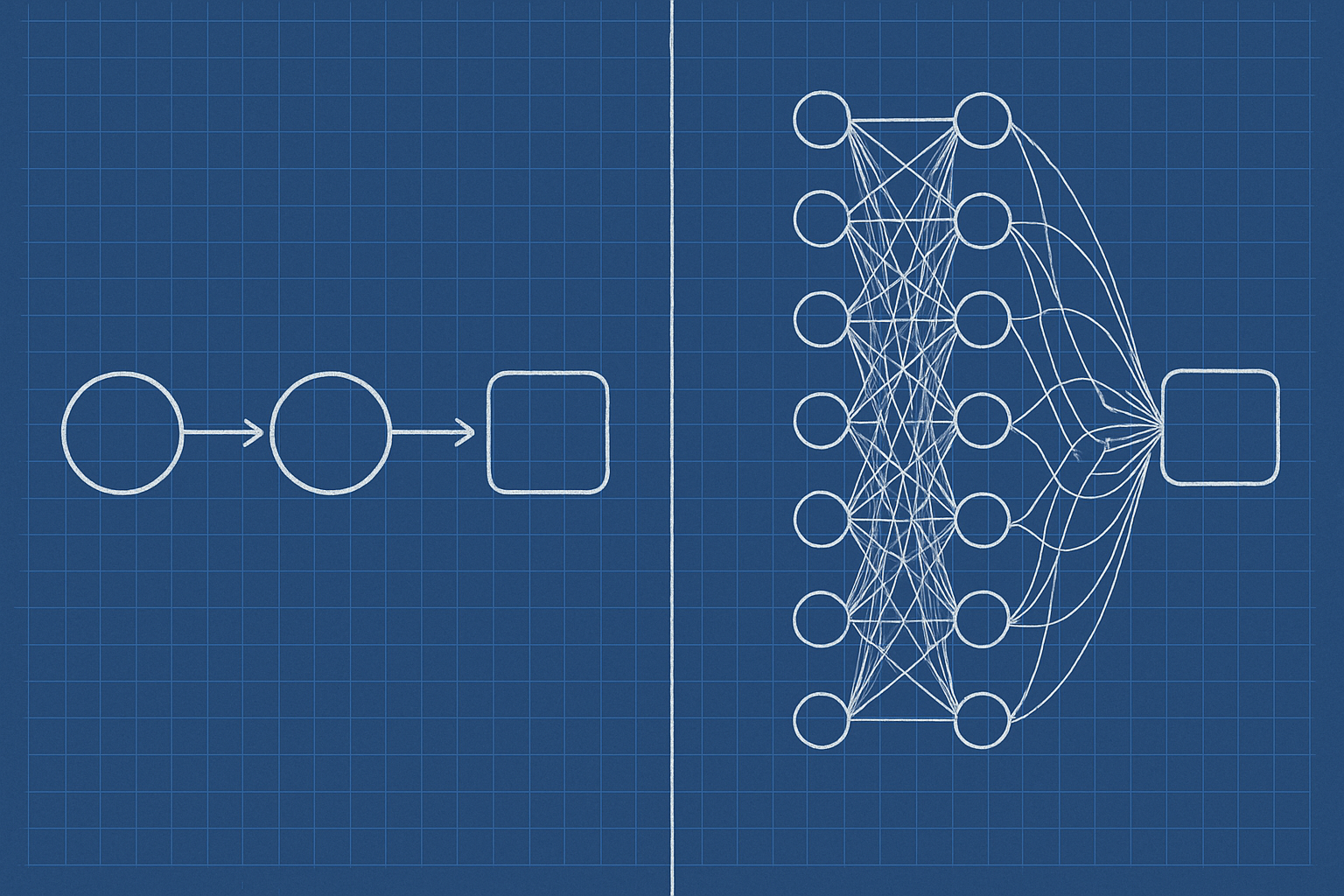
The ethics conversation in the episode hit differently than the usual hand-wringing. RaIAana’s framing—that bias detection and transparency aren’t compliance checkboxes but engineering requirements—is the perspective shift the industry needs.
When you’re operating at broadcast scale, bias in training data compounds exponentially. A recommendation engine that subtly favours certain demographics doesn’t just skew one user’s feed—it shapes what millions of people see. Tools like SHAP and LIME, which make AI decision-making interpretable, aren’t nice-to-haves. They’re foundational to building systems you can trust to run in production.
What I’m advocating for—and what we’re building into Ancast’s proof of concept programmes—is an ethics pipeline that sits alongside your data pipeline. Bias testing at every stage. Transparency tooling baked into the workflow. Human review triggers when confidence drops or edge cases emerge. It’s slower to build upfront, but it’s the only way to avoid catastrophic failures downstream.
The Q1 2026 Window is Real
Here’s where I land: the first-mover advantage in broadcast AI orchestration is measured in quarters, not years. Standards are gelling. Infrastructure is maturing. The operators who start proof of concepts in Q1 2026 will have 6-9 months on competitors still debating whether to move.
At Ancast, we’re running 8-12 week POCs with clear ROI measurement and human-in-the-loop design from day one. Not because we’re anti-automation, but because orchestration is what works reliably in broadcast environments right now. Autonomy will come. But it’ll emerge from systems we build with humans in the loop, not by replacing them.
The hype cycle chased autonomy. The actual work is in orchestration. And the window to get ahead is open, but closing.
Ancast Intelligence — AI in broadcast consulting by Ben Anchor.