
We’re Not Failing at AI Because the Tech’s Wrong — We’re Failing Because We Won’t Have the Hard Conversations

After two years of hype, 56% of companies are getting nothing from AI. In broadcast, the reason is painfully clear — and it’s not the algorithms.
I’ve just recorded an episode on why broadcast AI keeps failing, and honestly, it left me unsettled. Not because the problem is complicated — it isn’t — but because the industry is actively avoiding the diagnosis.
PwC’s global CEO survey dropped at Davos last week. The headline: 56% of companies are seeing zero value from AI. Not ‘modest returns’ or ‘teething problems’ — nothing. Only one in ten are seeing actual revenue or cost benefits. We’re two years into the so-called revolution, and nine out of ten organisations are either treading water or drowning.
Mohamed Kande, PwC’s global chairman, said something that stuck with me: “Somehow AI moves so fast that people forgot that the adoption of technology requires going back to the basics.” The basics. It sounds patronising until you realise how many broadcast organisations have skipped them entirely.
The Real Problem Isn’t Technology — It’s Coordination
I spoke recently with a broadcast technology leader who was refreshingly candid. His organisation knows they need to tackle AI properly. They’ve discussed creating a centre of excellence, a formal AI unit to coordinate efforts across the business. But here’s the block: that would require the whole organisation to align. And right now, they can’t even get the corporate verticals talking to each other.
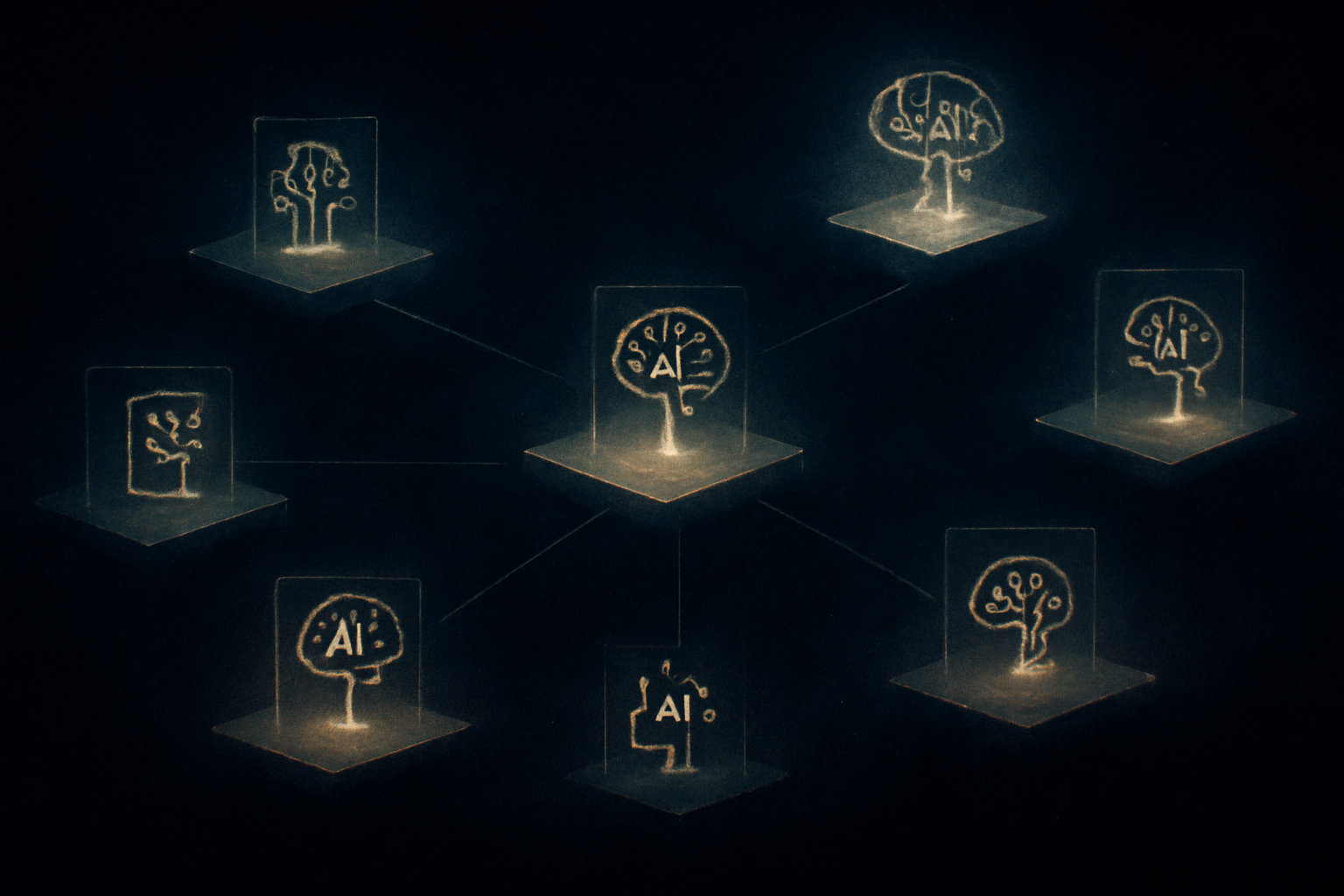
So what’s happening instead? Chaos. The news division is trialling one vendor. Playout engineering is experimenting with another. Advertising sales is running its own pilots. Facilities management is poking at something else entirely. No reference point. No shared best practice. No joined-up roadmap. No governance. No ethics framework. Just isolated experiments that never connect to each other or to actual business outcomes.
This isn’t even the familiar problem of bad silos — at least bad silos have discipline. What we’re seeing in broadcast is something worse: ad hoc, uncoordinated dabbling. And the reason it’s failing is almost entirely change management.
Change Management Isn’t Sexy — But It’s Where AI Dies
Change management doesn’t get you on stage at IBC. It doesn’t win innovation awards. But it’s where the real failure happens. MIT research found 95% of generative AI pilots fail. PwC’s data confirms why: companies skip the foundations. They bodge the clean data conversation. They bolt AI onto 1990s business processes. And they absolutely underestimate the human side of change.
Think about it: if you’re a broadcast operator who’s been running a playout system for 20 years, and suddenly an AI recommendation system says “change the schedule based on real-time viewership,” what’s your first question? It’s not “how clever.” It’s “who approved this?” “Do I trust it?” “What happens if it’s wrong?”
Without change management — without governance, without clear authority and accountability structures — that system gets ignored. Or worse, it creates conflict. The news director doesn’t trust it. The engineer doesn’t understand it. Finance has no idea if it’s working. And nobody’s taken the time to help anyone through that transition.
Why Broadcasters Are Avoiding the Hard Conversation
Here’s my theory: broadcast organisations are scared to create formal AI units because they think it signals “we’re replacing jobs” or “we’re doing something radical.” So instead of addressing that head-on, they let vendors and technologists run experiments in the shadows. No conversation with the teams who actually operate the systems. That’s the change management failure.
And that avoidance is costing them everything. Because without that conversation, you have no way to build trust. You have no way to handle exceptions. You have no way to say, “here’s how humans remain in control.” You just have isolated pilots that nobody understands or believes in.

The Data and Process Problems Are Just as Bad
Even if you sorted the change management, you’d still hit two other walls: data and processes.
Clean data in broadcast means knowing what you actually have. Most mid-sized broadcasters can’t map their own operational data across divisions. Scheduled metadata lives in three different systems that don’t talk to each other. Viewership data is patchy. Content libraries aren’t properly tagged. You cannot train AI on chaos.
And it’s not innocently overlooked — it’s the legacy of linear broadcasting. For 40 years, you could run a broadcast centre with a schedule printed on paper and phone calls. You didn’t need integrated data systems because everything was analogue, manual, and humans just figured it out. Now suddenly, you’re trying to feed that same operational mess into machine learning models. It doesn’t work.
Business processes? Same story. Broadcast organisations have sign-off chains designed for waterfall workflows and approval hierarchies that made sense when content took three months to produce. Now you’re telling a chief content officer that an AI system is suggesting real-time schedule changes based on engagement prediction. And the business process doesn’t exist to handle it. There’s no governance. No way to override it clearly. No trust mechanism. So the recommendation gets ignored, and the AI sits there unused.
We’re in the Disillusionment Phase — And That’s Actually Good News
Right now, we’re in what Gartner calls the disillusionment phase of the hype cycle. Here’s what that looks like in practice:
First, you have peak expectations. Everyone gets excited about ChatGPT and generative AI. “We need AI in our newsroom.” “We need AI scheduling.” Executives mandate it. Budget appears. Vendors circle. That was 18 months ago.
Then reality hits. You try to implement something. You discover your data is a mess. Your processes don’t support it. Your team doesn’t trust it. The vendor solution doesn’t work the way you expected. You run pilots that go nowhere. You spend six months and hundreds of thousands of pounds and realise nothing’s changed. That’s where we are now.
Most organisations do one of two things: quietly kill the initiatives and pretend AI doesn’t matter anymore, or become cynical and assume AI is all hype. Both responses are wrong.
There’s a third path: the slope of enlightenment. That’s when you stop blaming the technology and start fixing the fundamentals. You realise you need clean data. You redesign your processes. You establish governance. You bring in change management. You have hard conversations about what AI means for different teams. And you build a coordinated strategy that spans the whole organisation. That’s when you start seeing real ROI.
What Ancast Intelligence Is Here to Do
This is what Ancast Intelligence is designed to address. And frankly, it’s not sexy. It’s not the kind of thing that gets announced in a press release. It’s diagnostic rigour.
What you need is a crack squad of advisors — call them fractional CAIOs, diagnostic consultants — who come in and ask uncomfortable questions. Not “how do we implement AI faster?” but “what is the actual state of your data?” “What are your real business processes?” “Who owns the outcome?” Then they sit down and build a remediation roadmap.
A remediation roadmap sounds like admitting you’ve got problems. It is. And that’s exactly why most organisations don’t do it. They would rather hire a vendor and hope it magically works. But the ones who do the diagnostic work first — they’re the ones who actually get ROI. They’re the ones moving from disillusionment into enlightenment.
The Market Window Is Open — But Not for Long
Right now, 75% of broadcasters haven’t seriously attempted AI implementation. 25% have, and they’re in the disillusionment trough. That means the first movers who get their foundations right — who do the diagnostic work, remediate the basics, and build integrated change management — those are the ones who capture competitive advantage in the next 18 months. By 2027, this will be industry standard. But right now, you can move before your competitors even understand the problem.
If you’re a broadcast leader and something feels off — like you’re spinning wheels — start with three questions:
- Do you have a unified view of your operational data across broadcast divisions?
- Do you have business processes designed for AI-assisted decision-making, or are you still using 1990s approval chains?
- Do you have governance and override mechanisms so humans actually trust the system?
If you answer no to any of those, you’re probably in the disillusionment phase. And that’s actually good information to have — because you can do something about it.
The disillusionment phase isn’t permanent. It’s just the valley between hype and reality. The broadcasters who recognise they’re in it and move toward the basics emerge as industry leaders. The ones who pretend everything’s fine and keep hoping the vendor will fix it? They’re still spinning their wheels in two years.
Ancast Intelligence — AI in broadcast consulting by Ben Anchor.