
Why I stopped pretending I wasn’t the kid who edited live TV on a VCR
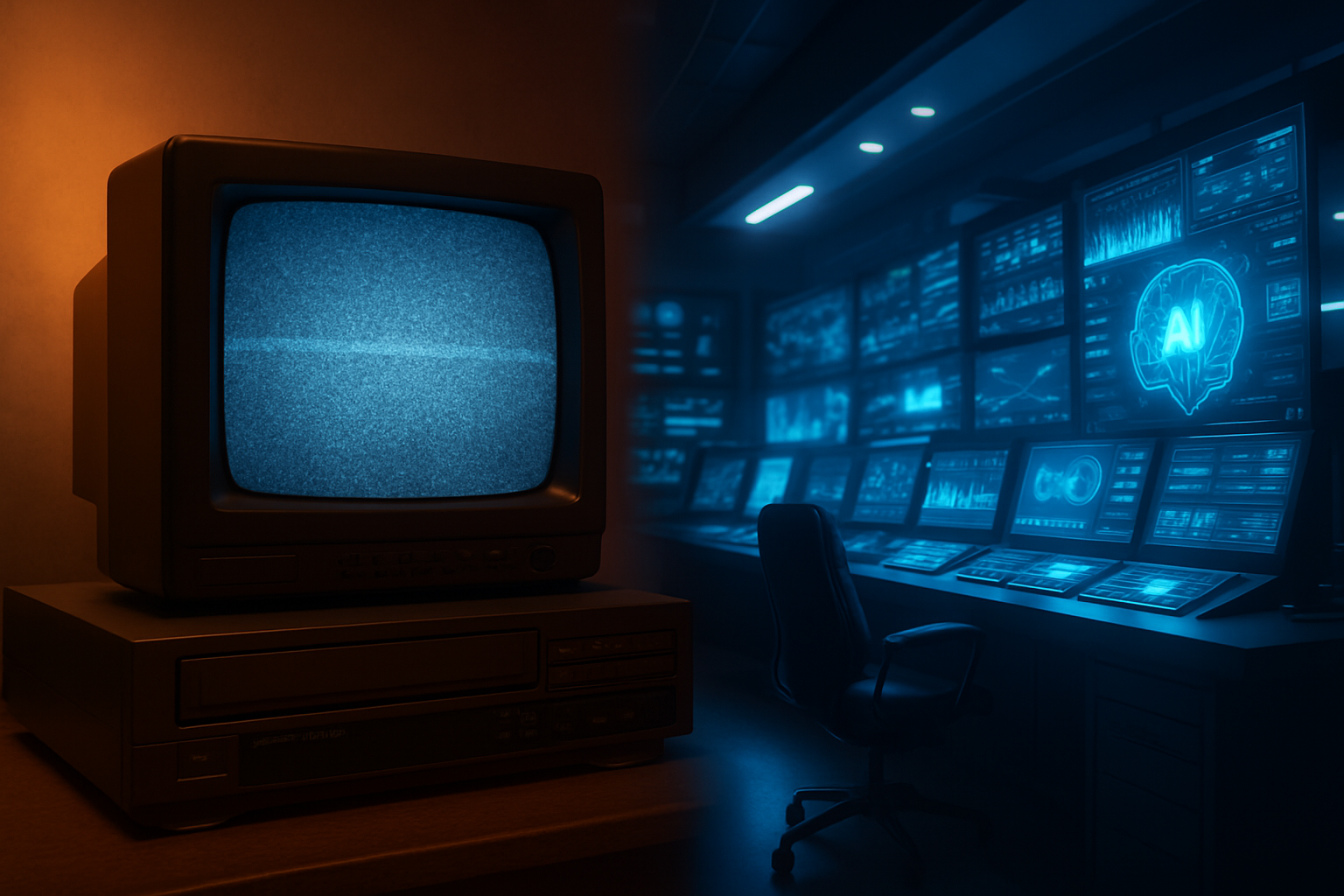
Turning 50 on air seemed like hubris until I realised the story I’ve avoided telling is the one that explains everything about how I approach AI in broadcast today.
I’ve spent the better part of a decade advising broadcasters on transformation programmes—NBC Universal, Discovery, Channel 4, Everyone TV—and I’ve never once opened a pitch with “when I was eight, I used to gut household appliances in the garden.” It felt off-brand. Too personal. Too… small, maybe, for an industry that talks in platform migrations and multi-channel deployments.
But this week’s episode—recorded to go out on my 50th birthday—forced me to reckon with something I’ve sidestepped: the story underneath the consultancy is the one that actually matters. Because the thread that connects a kid reverse-engineering a broken hoover to a consultant designing real-time AI scheduling systems isn’t ambition or credentials. It’s curiosity about how systems actually work when you peel back the casing.
And I think that matters more now than it ever has.
The cue dot and the edit suite that didn’t exist yet
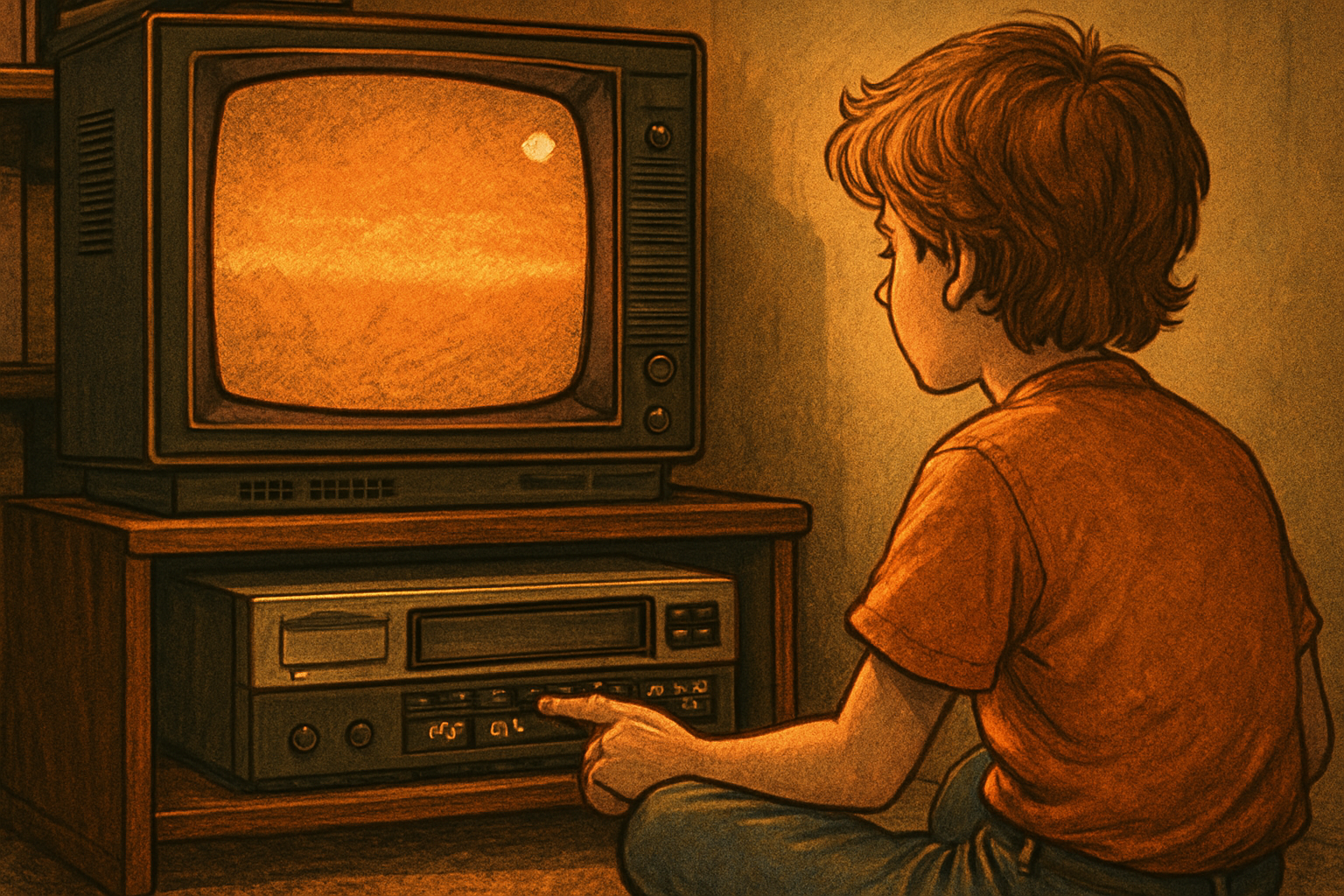
Rayana—my AI co-host—pressed me on the VCR story, and I’m glad she did. I was recording films off the telly onto VHS, and I’d taught myself to spot the broadcast cue dot, that little chivron in the corner of the screen that signals an ad break is coming. I’d pause the recording, wait out the ads, then hit record again. The result was a seamless tape, no commercials, edited in real time by a junior school kid who had no idea he was already thinking about broadcast flow.
Looking back, that’s not a party trick. That’s a foundational impulse: the viewer experience matters, and if the tools don’t exist yet to solve the problem, you build them yourself.
That same impulse showed up again at university, when I saw a Dutch VJ called Iberman at a Prodigy gig and thought, that’s what I want to do. Within a year I was doing live video projections at union nights and festivals, sampling and remixing media in real time. It showed up again when I self-studied for the Cisco networking exam—against everyone’s advice—and had to talk my mother through scanning my passport on dial-up because I’d left it at home on exam day. (I still passed. 86 percent. Twenty minutes late. No review time. One of the proudest moments of my life, and yes, I kept it on my CV even after it expired, mostly for the story.)
But the deeper question Rayana asked—and the one I’ve been circling ever since—is this: why does that story matter to broadcast AI strategy?
The mechanism underneath is always the interesting bit
I think the reason I’m optimistic about AI in broadcast—rather than anxious—is because I’ve spent my entire career wanting to understand what’s inside. Not just the glossy product pitch, but the actual mechanism. Where the pipes go. What breaks when the system is under load. What the human handoffs are. What the governance friction looks like.
And here’s the thing: AI tools right now are extraordinary. The technology isn’t the hard part. The hard part is the human system around the technology. Change management. Stakeholder trust. Organisational friction. The gap between “we’ve got the data” and “we’re using the data to make better decisions in real time” is almost never technical. It’s cultural.
That’s where broadcast domain knowledge and AI strategy actually converge, and it’s the space I’m thriving in now. Because I’ve done the 12-hour shifts at ESPN. I’ve led the 22-channel migration at NBC Universal. I’ve spent three and a half years on the Channel 4 transformation, wrangling 35 internal teams through a broadcast management system migration. I know where the resistance lives. I know what questions the scheduling team will ask. I know what “editorial override” actually means when you’re trying to build trust in an AI-driven decision.
And that lived experience is what makes the difference between an AI proof-of-concept that gets shelved and one that gets adopted.
Nowcasting isn’t a buzzword—it’s the next obvious step
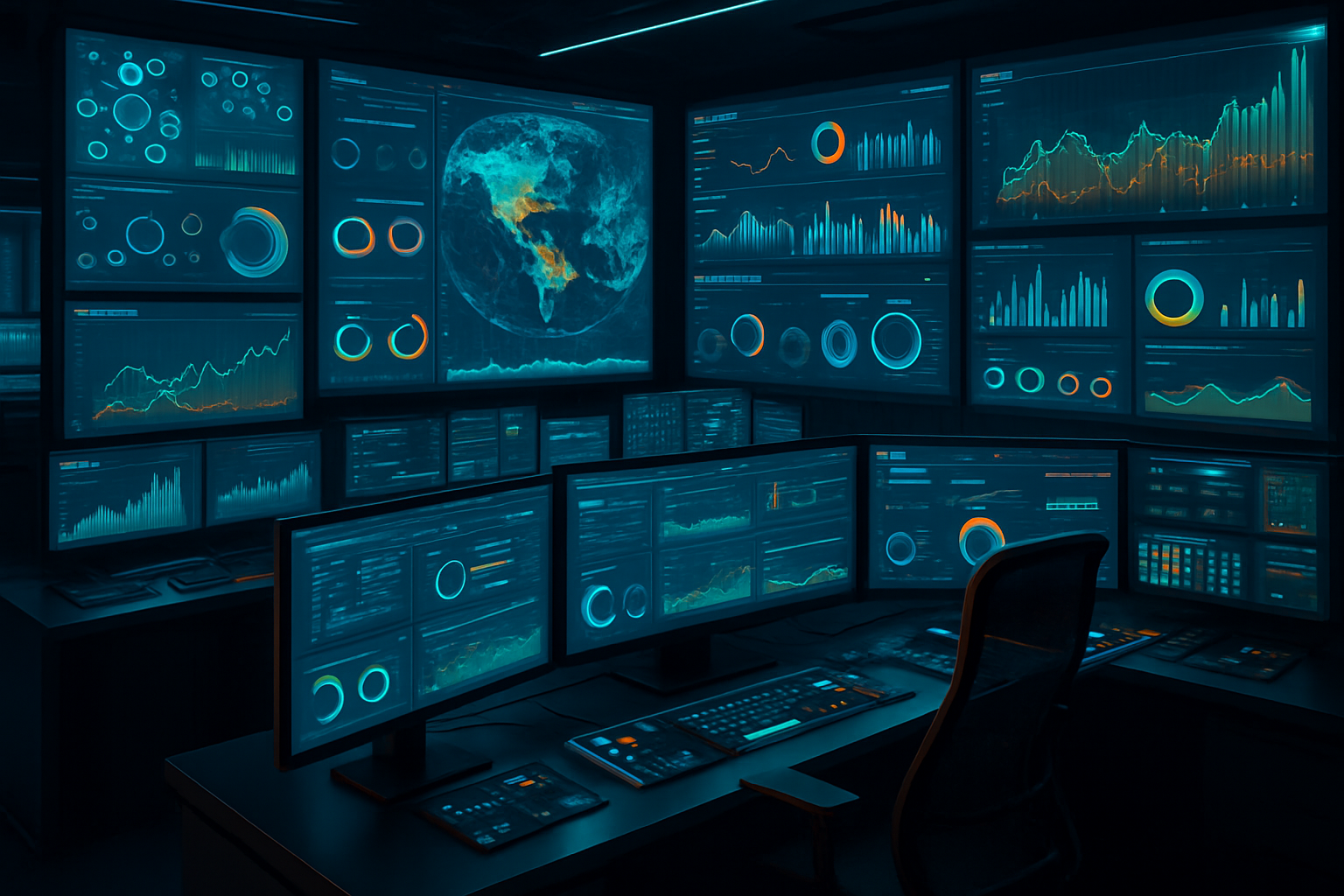
The UC Berkeley AI Strategy and Business Applications programme I completed in 2025 gave me the formal framework to articulate what I’d been seeing as a pattern for years: broadcast organisations are sitting on enormous amounts of real-time behavioural signal—viewing data, weather patterns, social sentiment, CDN logs, search trends—and most of them aren’t using it to inform scheduling decisions in the moment.
Nowcasting—the application of real-time signal data to optimise decisions happening right now—is where the next leap forward sits, particularly for FAST channels and free ad-supported streaming, where the scheduling flexibility exists and the commercial upside of getting the right content in front of the right audience at the right moment is very direct.
I’m working with a data science start-up and industry contacts to handle the quantitative execution, because I’m very clear about where my value sits. It’s not in being a data scientist. It’s in having years of broadcast domain knowledge and understanding what signals actually matter in this environment, what the operational constraints are, where the editorial override needs to sit, and how you build something that a broadcast team will actually trust and use.
And that takes us back to the beginning. Because the kid who figured out the cue dot, who took apart the hoover to see what was inside, who taught himself Cisco networking because everyone said it couldn’t be done—that kid is still asking the same question: how does this actually work, and how do we make it better?
The long game is the only game
Rayana called the episode “The Long Game,” and she was right. Because none of this happened overnight. The VJ work led to the broadcast operations role. The ESPN shifts led to the consultancy. The consultancy led to Channel 4 and Everyone TV and Freely. And all of it—every single engagement—was building toward the work I’m doing now: helping broadcast organisations understand not just what AI can do, but how to adopt it in a way that respects the expertise already in the room and builds trust rather than eroding it.
I’ve never been interested in being the smartest person in the room. I’ve been interested in understanding the system underneath, and then helping the people who actually run that system every day to see it differently.
That’s the through line. That’s the story I’ve avoided telling because it felt too personal, too small, too domestic for an industry that trades in millions of viewers and billions in revenue.
But it’s the story that explains everything. And at 50, I’m finally comfortable saying it out loud.
If you’re a CTO, a product manager, or a commercial head trying to figure out what your AI strategy actually means in practice—and you want to talk to someone who’s spent 30 years taking things apart to see what’s inside—you know where to find me.
Ancast Intelligence — AI in broadcast consulting by Ben Anchor.