
The Infrastructure Decision That Broadcast Still Gets Wrong

Padraig O’Donovan’s career arc — from stitching together 14 vendors in 2012 to spinning up broadcast production in 30 minutes — exposes an uncomfortable truth about how we’ve been matching infrastructure to content. Spoiler: we’ve been doing it backwards.
I’ve been consulting in broadcast long enough to know when someone’s describing a genuinely structural shift versus just rebranding the same old workflow with newer buzzwords. Padraig O’Donovan’s appearance on the podcast this week was firmly in the former camp — and one thread in particular won’t leave me alone.
It’s this: not all content is equal, so why do we still treat infrastructure as if it is?
The £7.5m Lesson We’re Still Learning
Padraig walked me through a 2012 digital transformation at Channel 10 in Australia — a £7.5m project stitching together 14 separate suppliers into a working media operation. Broadcast, commercialisation, analytics, delivery, CMS, VMS — the full stack. That’s the kind of integration nightmare that keeps CTOs awake at night, and it’s exactly the model most broadcasters still operate today: monolithic, inflexible, vendor-locked.
Fast-forward to now. Padraig’s company, Layercake, can spin up an end-to-end cloud broadcast production solution in about 30 minutes. Not a proof-of-concept. Not a demo. A working, event-ready production environment. Then you tear it down when you’re done. Deploy and destroy.
That’s not just a speed improvement — it’s a fundamentally different cost model. And yet, the real innovation isn’t the cloud infrastructure itself. It’s what Padraig calls tiered infrastructure aligned to content value.

Here’s the logic: broadcasters already stratify content by value. That’s what a TV schedule is — a ruthlessly commercial decision about what sits in primetime versus daytime versus the graveyard shift. Live sport at 7pm Saturday is worth more than a repeat sitcom at 2am Tuesday. Everyone knows this.
So why are we still running both through the same infrastructure tier?
Padraig’s model lets you match infrastructure cost to content value. Top-tier content gets top-tier infrastructure. Everything else cascades down through three to five tiers, each calibrated to quality, resilience, and — crucially — cost. You’re no longer over-provisioning for content that doesn’t justify it, and you’re not under-delivering on the stuff that drives revenue.
This should be obvious. But it isn’t, because legacy broadcast has conditioned us to think in terms of uniform platforms rather than variable workflows. We’ve been optimising for operational consistency when we should have been optimising for commercial alignment.
The Cloudflare Outage Problem
Padraig also touched on something that rattled a lot of people last year: the Cloudflare outages. Cloudflare is brilliant technology — Layercake uses it — but when it goes down, it goes down hard, and if you’re wholly dependent on it, you’re offline.
The hardware-era broadcast model had one thing going for it: redundancy. If a piece of kit failed, you failed over to a backup. It was expensive, yes, but it worked. Cloud hasn’t fully replicated that resilience yet — at least not in the way most broadcasters have deployed it. Too many have moved to cloud as a cost exercise, not a resilience exercise, and that’s left them exposed.
Layercake’s answer is CDN switching using triggers — automated failover across CDNs so that if one drops, the stream doesn’t. It’s infrastructure-agnostic by design, meaning you’re not locked into Amazon, Google, Oracle, or anyone else. You can pick the best tool for the job, and if that tool stops working, you move to the next one without the audience noticing.
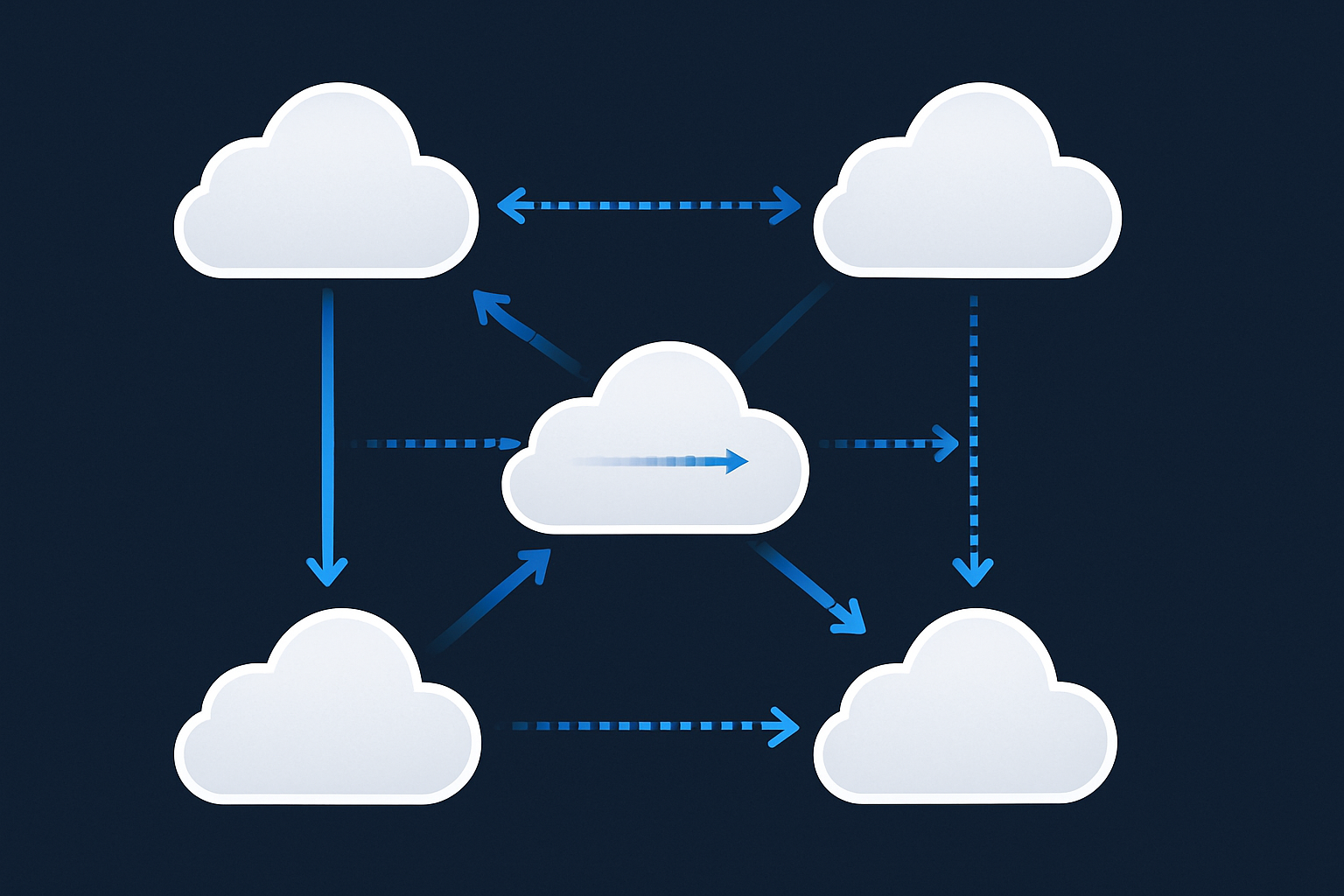
This is where Ancast Intelligence thinking comes in. The traditional broadcast mindset is: choose a vendor, commit, integrate deeply, hope nothing breaks. The modern mindset — the one we’re training through UC Berkeley Nowcasting work and applying in our own consulting — is: assume failure, design for resilience, automate recovery. That’s not paranoia. It’s architecture.
AI That Actually Serves a Commercial Purpose
Padraig also talked AI, and mercifully, none of it was hand-waving. He cited Magnify, which uses AI to pull exciting short-form clips from live streams in real time and push them to social with brand integration. That’s not AI for AI’s sake — that’s AI solving a dual commercial problem: driving tune-in and creating a new monetisable asset from content that’s already being produced.
He also mentioned iSports (manual sports analytics now being automated) and Sports Visio (processing grassroots volleyball and basketball through AI to extract insights that would never have been commercially viable before). Both are examples of AI expanding the addressable content base — making previously uneconomical workflows suddenly viable.
That’s the test I apply to any AI pitch in broadcast: does it unlock new revenue, reduce cost in a way that doesn’t compromise quality, or make something possible that wasn’t before? If the answer’s no, it’s probably just AutoML in a trench coat.
So What’s the Takeaway?
The broadcast industry is still operating with an infrastructure model designed for a world where you built once and ran forever. That world’s gone. Content is variable, consumption is fragmented, and audiences expect resilience that most broadcasters can’t deliver because they’ve optimised for the wrong thing.
Padraig’s work at Layercake shows what happens when you flip the model: you treat infrastructure as a variable cost aligned to content value, you design for failure and automate recovery, and you use AI where it genuinely serves a commercial purpose.
That’s not the future. That’s the present. The question is whether the rest of the industry catches up before the streamers — who’ve been doing this from day one — eat what’s left of the traditional broadcast business model.
I suspect we’ll find out at NAB in a few weeks. I’ll be watching.
Ancast Intelligence — AI in broadcast consulting by Ben Anchor.