The List Is Dead. The Word Is Fine.
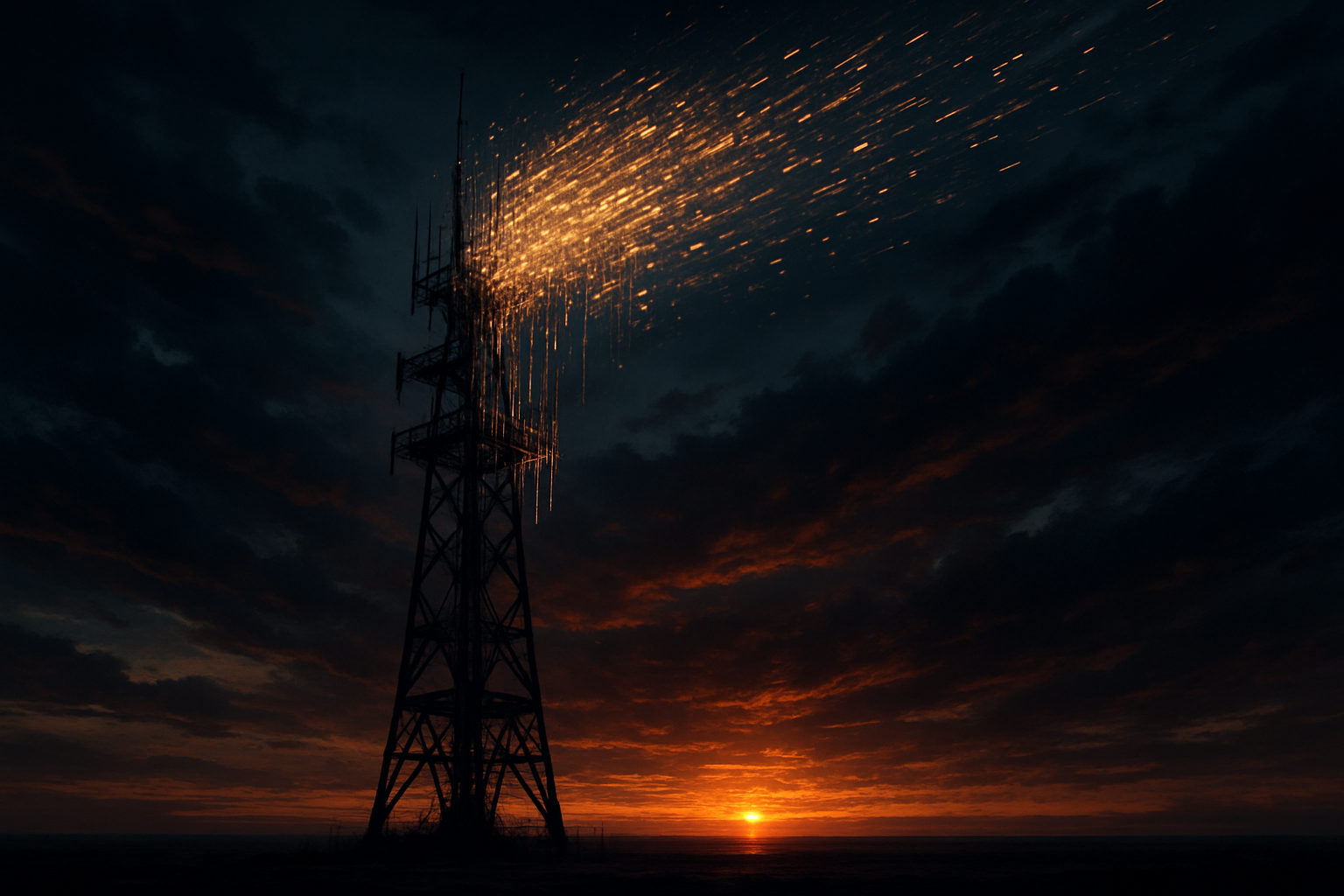
We spent decades defining broadcast by its delivery method — towers, schedules, the five sacred mediums. Then someone handed the kids an algorithm and called it progress. Now we’re learning the hard way: distribution was never the job.
I’ve been turning over a line from last week’s podcast that I can’t quite shake. A colleague once told me that to a lot of millennials, TikTok is broadcast. Not a rival to it, not ‘new media’ — just broadcast. The thing that’s on.
My first instinct was to dismiss it. Broadcast means one signal to everyone, a shared moment, a schedule. TikTok is a private feed assembled by an algorithm for an audience of one. The two things are definitionally opposed. But the more I’ve sat with it, the more I think she was describing something true about the world as the audience experiences it — and that’s the only definition that has ever mattered commercially.
To that viewer, broadcast was never the tower or the schedule. It was the experience of turning something on and being fed. Television did the choosing for you with a schedule. The feed does the choosing for you with an algorithm. From the sofa, those feel like the same service. And one of them is simply better at it.
The Machine Room Floor
I didn’t just read about this transition in a regulator’s report. I spent years inside the buildings while it happened. The projects tell the story.
Early in my career, a television facility was a physical thing you could walk through. Machine rooms full of racks, hardware everywhere, miles of cable under the floor. A transmission chain you could follow with your finger from the studio all the way to the aerial on a roof.
Then the projects started changing shape. First the boxes became software. The router that filled a rack became a licence key. Then the software left the building entirely. I found myself running cloud transformation projects, virtualising the very hardware I’d spent years installing, moving playout and processing into data centres we’d never visit.
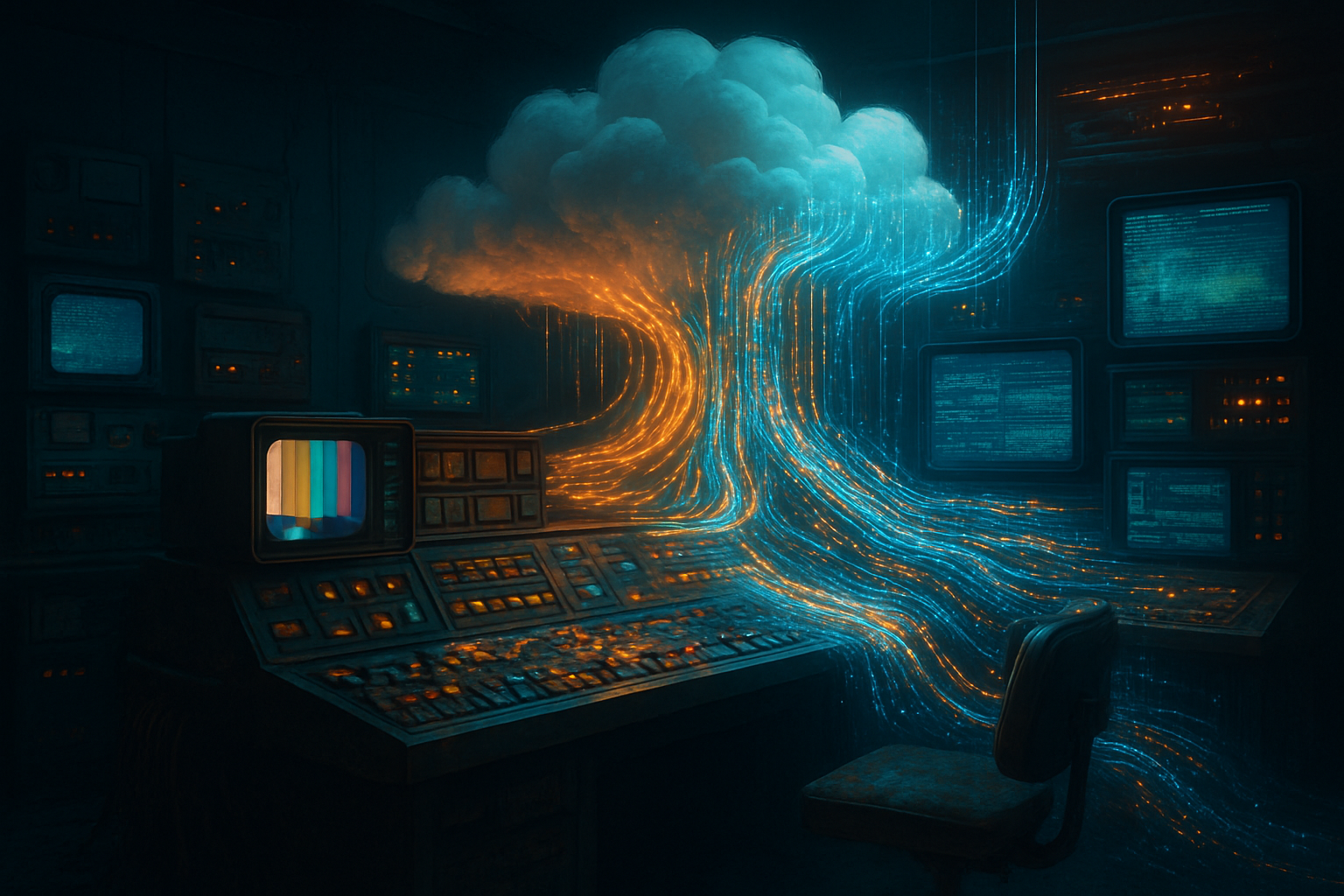
At the same time, streaming and on-demand went from a side project run by three people to the thing the whole strategy meeting was about. And here’s the part I clocked too slowly: look at who we were buying it all from.
The infrastructure stopped coming from the traditional broadcast vendors and started coming from Silicon Valley. The cloud was theirs. The platforms were theirs. The recommendation engines were theirs. We thought we were procuring suppliers. What was actually happening was that the technology companies were becoming the transmission chain.
The tower on the hill got replaced by somebody else’s data centre. And once your distribution belongs to somebody else, the question of what broadcast is stops being philosophical and becomes commercial.
The Crocodile Strategy
Which brings us to the British broadcasters’ response — and this is where I want to press hardest, because from the outside it looks like surrender dressed as strategy.
ITV is uploading full episodes of The Chase and its reality catalogue to YouTube. Channel 4 got there first and calls it a triumph. The BBC is following. The case for goes like this: the broadcasters spent a decade trying to force viewers into their own walled garden apps, one login per channel, and the audience simply refused. You can’t make a 19-year-old download the ITVX app out of civic duty. So the channels concluded they must fish where the fish are, and the early numbers show those full episodes reaching viewers linear hasn’t touched in years.
The case against is exactly my crocodile metaphor. On your own channel, you own the relationship, the data, the advertising. On the platform, you’re a tenant. The algorithm decides whether you get seen, and the audience relationship belongs to the feed.
My honest read is that both are true. It’s the rational move, and it’s a retreat. The public service broadcasters are conceding that distribution — the thing the towers gave them — is no longer theirs, and betting that the content and the trust still are.
I think that bet is defensible, but only if you pair it with something most of them aren’t doing yet: measuring yourself honestly. Put the platform numbers on the same dashboard as the overnights. If under-25s are a rounding error in your reporting, you’re navigating with a chart of a coastline that no longer exists.
The Synthetic Flood
And then there’s the machine in the room. Because you can’t talk about the feed without talking about what’s pouring into it.
The platform’s own chief executive admitted this year that roughly one in five short videos recommended to a brand new user is mass-produced AI-generated content. Independent researchers found the same — about a fifth fully synthetic, and another third the repetitive engagement bait that’s earned the nickname ‘brain rot’. One study found nearly 300 channels producing nothing but automated content. Over 60 billion views between them. An estimated $100 million a year in advertising.
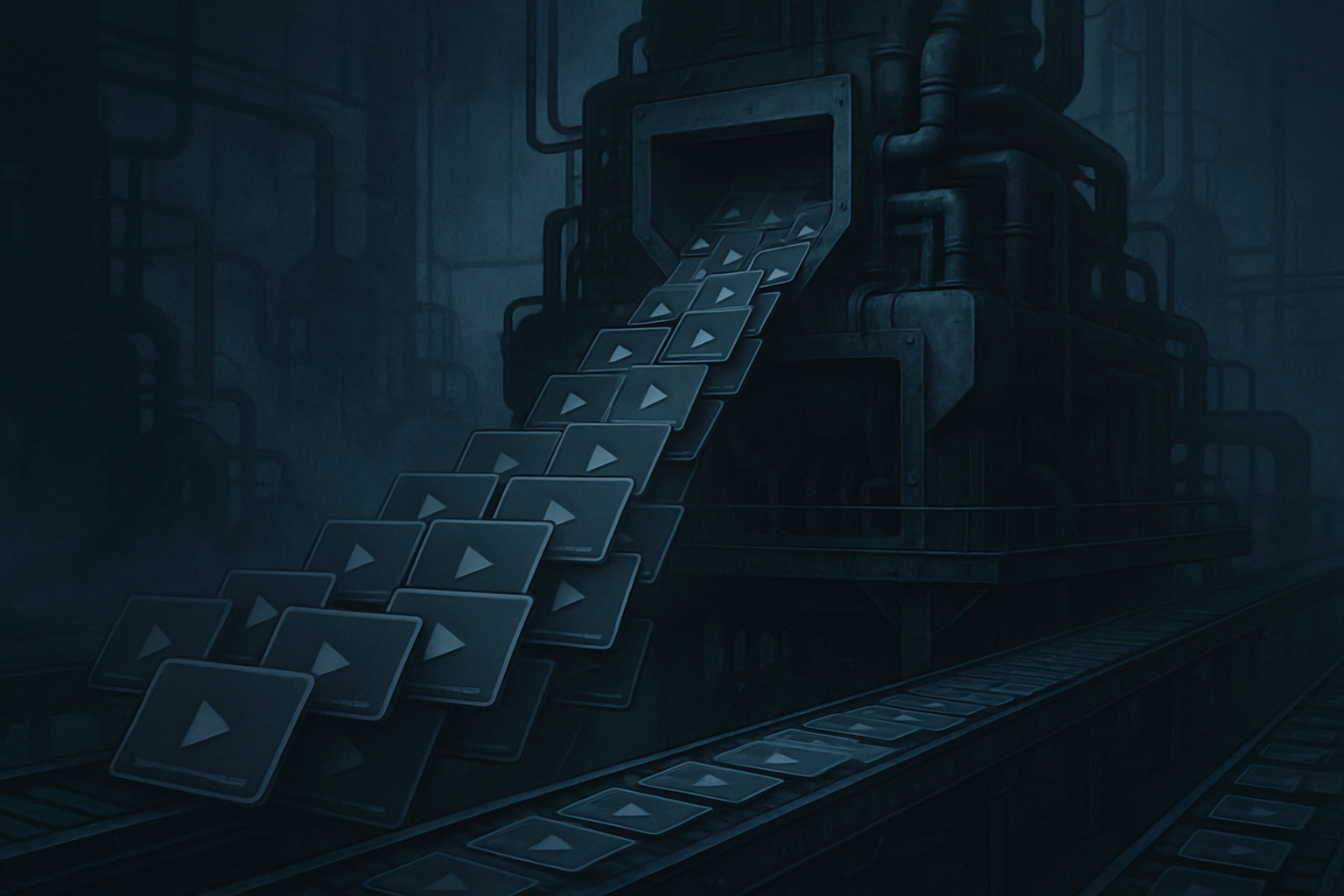
That’s making content for an audience of algorithms, humans almost incidental to the transaction. The platform has been forced to respond — deleting the worst offenders, tuning recommendations back towards what it calls ‘authenticity’, automatically labelling suspected synthetic video.
And here’s where I think the opening is for British broadcasters specifically. In a feed filling with anonymous synthetic content, an institution that can say a named human made this, checked this, and stands behind it is suddenly holding something scarce.
Connect that to the vertical drama boom, where studios talk openly about AI cutting production costs by up to 80%. The same technology sits on both sides of the line. With editorial judgement, it’s a production tool. Without it, it’s landfill.
What Broadcast Is Now
So here’s my answer to the question in the title, no strategy deck hedging.
The list is dead. The word is fine.
Print, outdoor, cinema, radio, television — that list described delivery mechanisms, and delivery mechanisms were always temporary. I’ve personally decommissioned half of the ones I trained on. But the act the word describes — reaching many people at once, in public, with your name on the output — that act is bigger than it’s ever been.
A creator with 600 million subscribers is broadcasting. A quiz show reaching millions on an open platform is broadcasting. Arguably, my colleague was right, and the TikTok generation is the biggest broadcast audience in history. They just receive it one feed at a time.
What’s not broadcasting is the anonymous synthetic flood, however many views it gets, because nobody stands behind it.
So if you work in this industry, stop defending the mediums. They were never the job. The job was being worth receiving, and putting your name on it. That job is still open. It just no longer comes with a tower.
Three practical things for Monday morning:
One, measure yourself honestly. Put the platform numbers on the same dashboard as the overnights, because your competitor is not the channel next door on the grid — it’s the feed.
Two, treat formats as liquid. Every commission should be able to answer what it is as a vertical, as a clip, as a podcast, as a full episode on the open platform. Decided in the room where it’s greenlit, not bolted on by marketing.
Three, make the machine your production tool before it becomes your replacement, and pair the falling cost curve with the one thing the slop channels can’t manufacture: accountability.
The towers are gone. The work remains.
Ancast Intelligence — AI in broadcast consulting by Ben Anchor.