Why I’m Done Chasing Deals at Trade Shows (And What I’m After Instead)
After years of lanyards, carpets, and expensive coffee, I’ve realised the real ROI from events isn’t on the show floor—it’s in what happens months later, when you’ve stopped trying so hard.
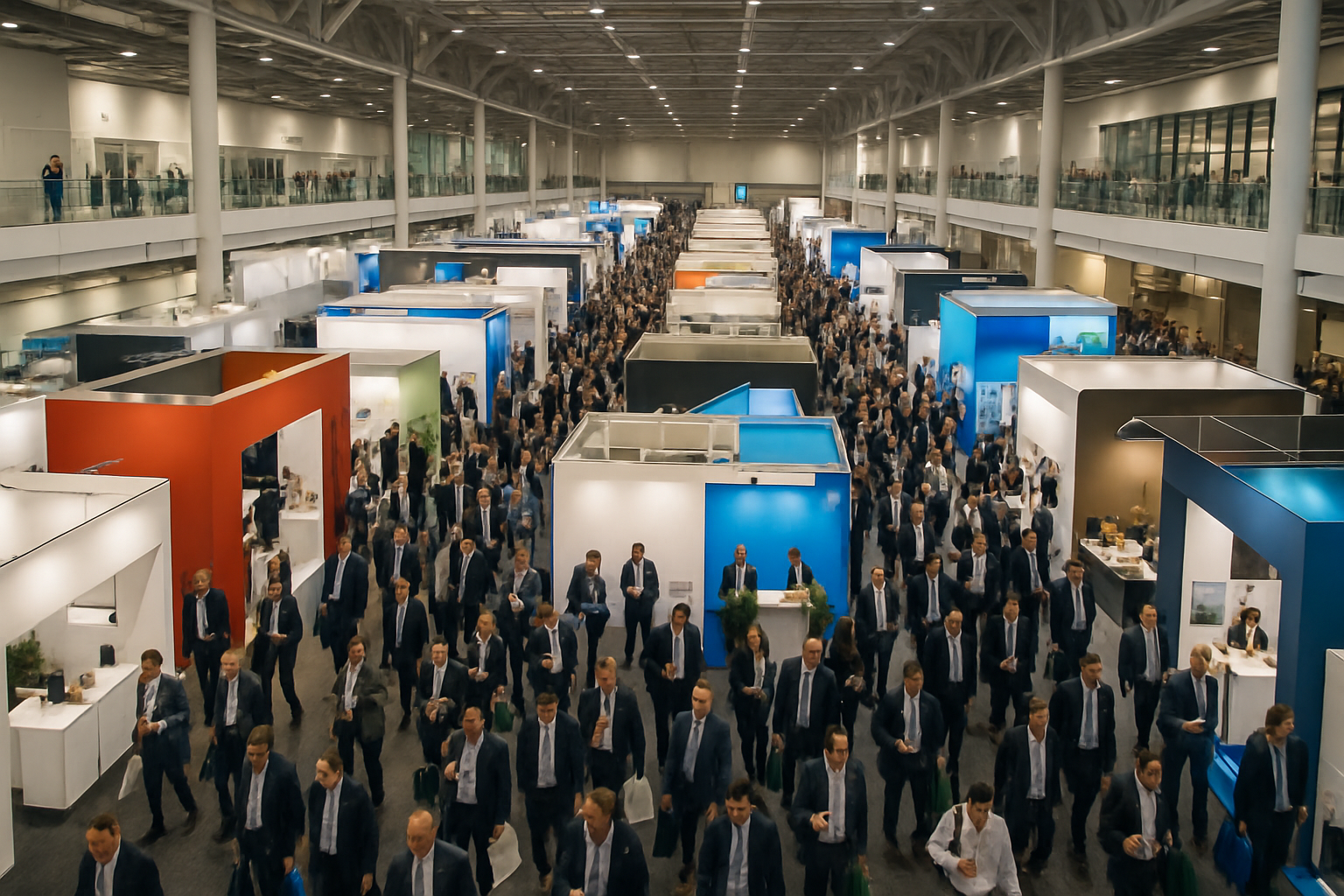
I’ve just spent a week in Nepal at a wellness-meets-ambition gathering with about 100 people, and in nine days I’ll be standing in Amsterdam with 45,000 others at IBC. Same planet, wildly different planets.
One’s got sunrise yoga and summit circles. The other’s got branded lanyards and €8 espressos. Both are called ‘events’. Both promise connections. And yet I’d wager most people book the wrong one, show up with the wrong expectations, and leave disappointed.
This bonus episode—recorded at Nomad Basecamp in Pokhara with investor Sheikh Saifudeen and e-commerce founder Biplab Karki—pulled apart that tension. We talked about reach versus peers versus procurement, about spiritual reprogramming and agentic commerce, and about why the hustle to close a deal on the stand is usually the least valuable thing you can do.
The Three-Way Split: Reach, Peers, Procurement
I floated a framework: talks are about reach (getting your message out), conferences are about peers (building your network), and trade shows are about procurement (doing deals). It’s a tidy model. It’s also probably wrong.
Sheikh’s take was that people come to events—whether it’s a spiritual gathering in the Himalayas or a procurement fair in Europe—to improve their lives. Maybe it’s a single idea. Maybe it’s a relationship. Maybe it’s just permission to think differently. The form of the event matters less than whether you walk away with something that shifts your trajectory.
Biplab, who’s been to startup expos across Asia, agrees it’s mixed. An exhibition can yield clients or collaborators or just a better sense of what’s happening in an adjacent industry. He went to a goods expo in Thailand not to buy anything, but to understand the economy and lifestyle. That’s a peer move at a procurement event.
I think they’re both right, and my neat categories are less useful than I’d hoped. But the underlying question stands: why are you there, and are you set up to receive what you actually need?
The Myth of the On-Site Close
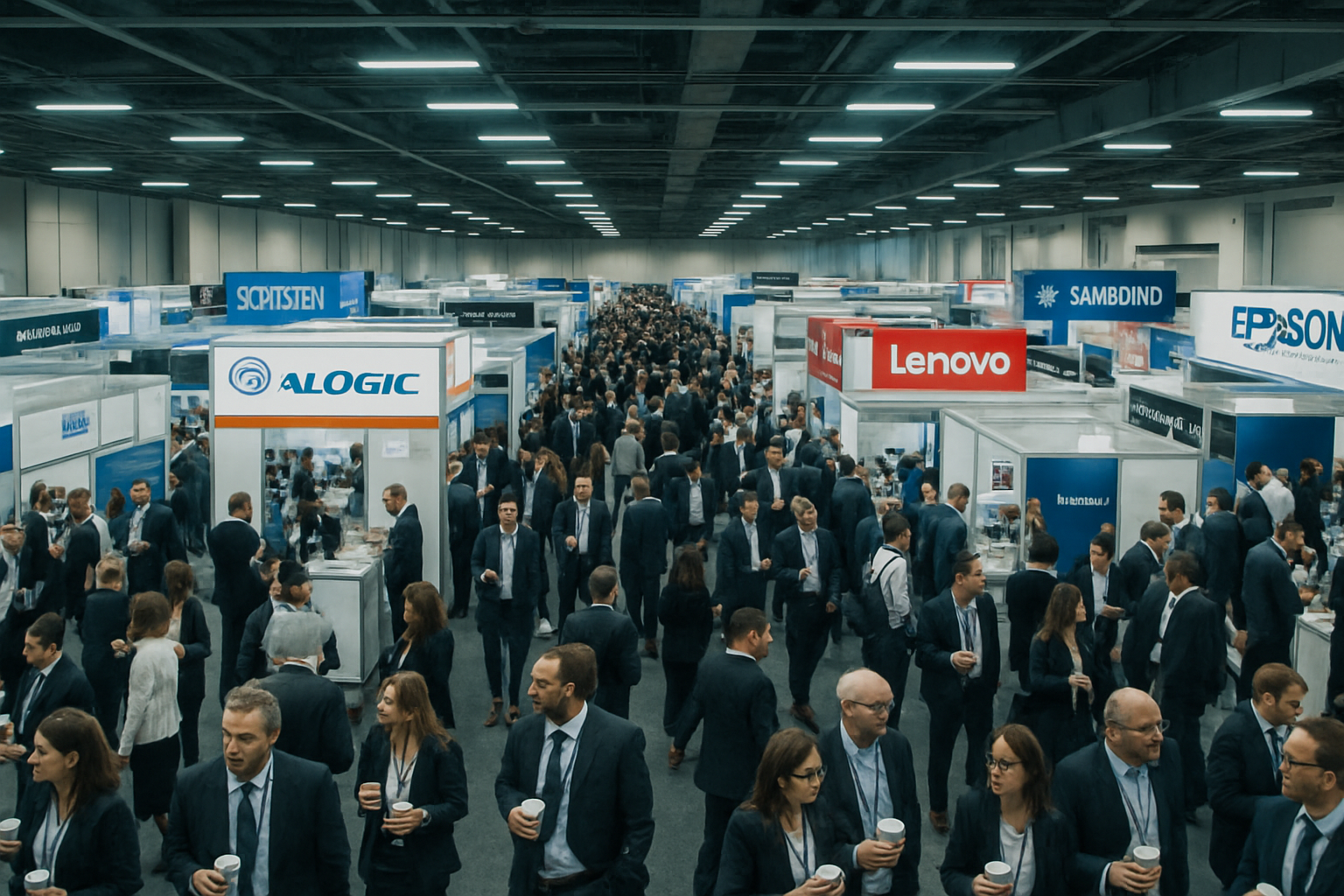
Ten years ago, I’d rock up to a stand with a target: X meetings, Y leads, Z closes. The pressure was real, especially if you’d spent five figures on the footprint. Sheikh’s been on both sides—exhibiting for his own e-commerce business and working procurement for others—and he remembers that expectation to recuperate funds. But he’s also clear: the most valuable thing was always the contact list. Emails. Ways to stay in touch. Because deals rarely close on the floor.
He reckons it takes five to nine touches before trust is built and a deal gets done. You meet someone, they get an email, maybe a follow-up, maybe they click through to your site. A few months later, when the need aligns, then they buy. The stand is just touch one.
Biplab frames it as ROI over time. You invest now—booth, travel, team—and you get direct ROI in three, six, twelve months. But you also get indirect ROI immediately: branding, content, social proof, understanding. If you’re only measuring the former, you’re missing half the value.
I’ve lived this. I’ve had conversations at IBC that led to nothing for two years, then suddenly the person’s at a new company, remembers me, and we’re in business. If I’d been fixated on closing them in Amsterdam, I’d have written them off as a waste of time. Instead, I stayed in touch, stayed useful, and let the relationship mature.
The insight: stop trying to force the close. Start collecting the threads.
AI as Co-Founder, Scheduler, Spiritual Advisor
We pivoted to AI, because it’s what the main podcast is about and because both guests had strong views. Biplab’s building an agentic commerce platform—think AI agents running your e-commerce ops, talking to your ERP, optimising your supply chain. He reckons you could halve your headcount and double your efficiency. Bold claim, but the trend’s real. Google’s betting on it. So are a dozen well-funded startups.
Sheikh uses AI differently. He’s plugging his thoughts, goals, and internal blocks into a model and treating it like a personal advisor. Not just for business strategy, but for subconscious reprogramming. He’s asking: where am I limiting myself? What beliefs are holding me back? What do I need to shift internally before I take the next leap? It’s consciousness work, but with a chatbot.
I loved that framing. AI as the best on-demand co-founder, consultant, and therapist rolled into one. It sees what you can’t see—or at least, it mirrors back patterns you’ve been too close to notice.
For me, the next 12 months are about taking that idea into broadcast scheduling. I’m building Ancast Nowcasting: a custom model that doesn’t just learn from a broadcaster’s historical data, but ingests live public signals—search trends, social media, cultural moments—to give schedulers a superpower. Not an LLM wrapper. A genuinely new intelligence layer. I’m at IBC to talk about it, then South Africa, then the Middle East. This time next year, I want pilot studies done and proof of concepts in production.

What I’m Taking Away
Three things stuck with me from this conversation.
First, events are format-agnostic when it comes to value. A 100-person basecamp and a 45,000-person trade show can both deliver life-changing connections—or neither. It’s not about the carpet or the catering. It’s about what you’re open to receiving.
Second, ROI is a lagging indicator. If you’re measuring success by what happens at the event, you’re looking at the wrong timeframe. The real return shows up months later, when the trust compounds and the timing aligns.
Third, AI is only as good as the questions you ask it. Whether you’re using it to optimise a supply chain, reprogram your subconscious, or build a nowcasting engine for schedulers, the magic isn’t in the model—it’s in how clearly you’ve defined the problem.
I’ll be in Amsterdam from the 11th. If you’re there and want to talk broadcast AI, Nowcasting, or just compare notes on trade show coffee, book a slot. I won’t try to close you. I’ll just collect the thread.
And maybe, in six months, we’ll both be glad we did.
Ancast Intelligence — AI in broadcast consulting by Ben Anchor.